In short
- Measure ownership and follow-up failures rather than counting rows alone.
- Define relationships and stage meanings before migration.
- Evaluate a configured CRM before assuming a custom build is necessary.
- Pilot real tasks and keep a verified export and support owner.
A business outgrows spreadsheet lead tracking when ownership, permissions and follow-up reliability become difficult to maintain. There is no universal lead-count threshold. Measure the actual failure points, then compare a configured CRM with custom lead management software. A spreadsheet may still be adequate for a simple process with clear accountability.
Recognise the workflow failures behind the spreadsheet
Identify the operational symptoms instead of treating software as a milestone. Do representatives contact the same account without knowing about each other? Do managers discover overdue follow-ups only after manually combining files?
Can anyone explain which version is current? These problems suggest shared workflow requirements. A small team with a short, stable process may still manage effectively in a controlled sheet, so assess the job rather than the appearance of maturity.
Give each lead an owner and a next action
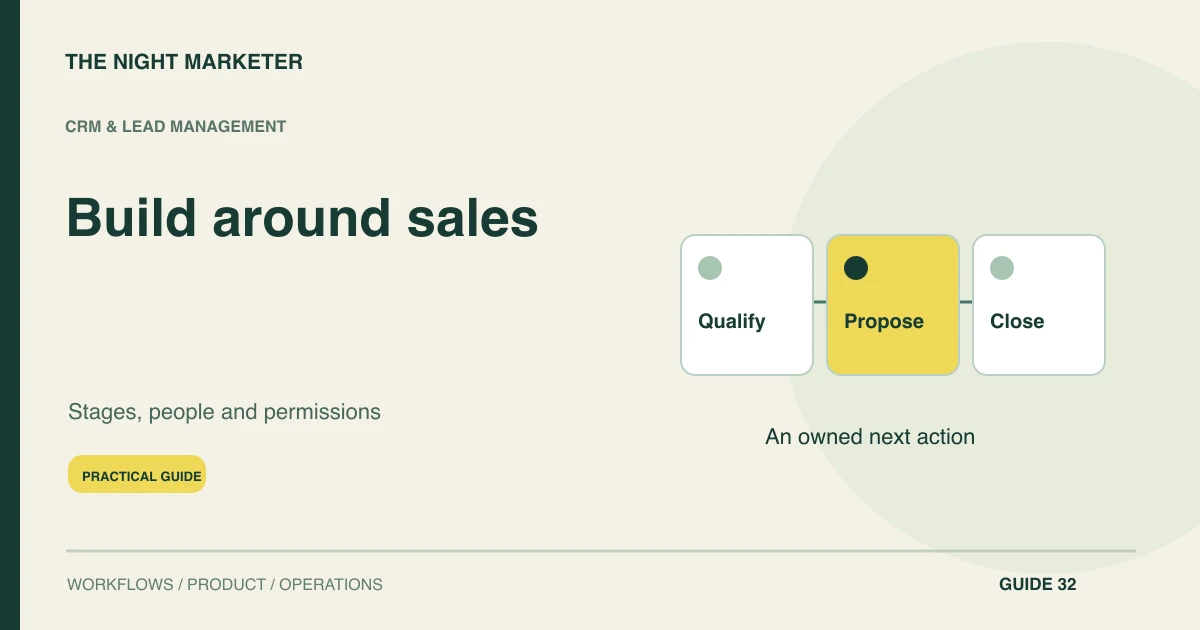
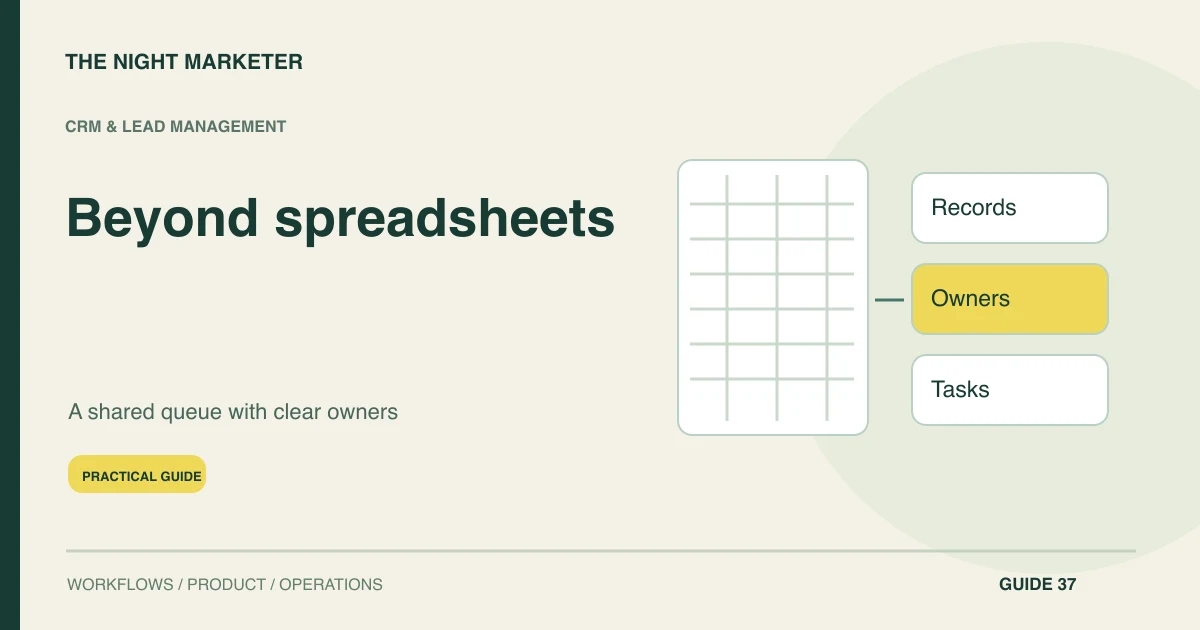
Separate record keeping from work management. A row can store a name and status, but the process also needs an accountable owner, a meaningful next action and a due state. Define who can reassign a lead and what happens during absence.
Make qualification and closure definitions consistent. Otherwise, migrating the same ambiguous columns into an application can produce a more expensive version of the original problem.
Compare a configured CRM with custom development
List the relationships the team actually uses. Several people may belong to one account, and one account may have multiple opportunities. Activity history, quotations and permissions need to follow those relationships.
Review whether a packaged CRM can support them through configuration before commissioning custom software. Custom development deserves consideration when an essential workflow remains unsupported and the business can maintain the resulting application over time.
Move when the process needs shared control
Before buying, document the exact symptom and its cost in work: time finding the latest record, duplicate calls, missed handovers or incorrect access. If the sheet remains dependable, adding clear ownership and validation may be enough for now.
If the team needs a shared queue, compare a packaged tool with a custom workflow. LeadNests lead management documents lead distribution, statuses and reminders, while TNM's lead management workflow guide describes the operational scope to evaluate. Neither a larger row count nor a new AI label alone establishes the need for a custom build.
Clean and verify the migration data
Prepare the data before migration. Standardise necessary fields, preserve source identifiers and agree a duplicate policy. Keep uncertain matches available for review.
Import a small sample and compare the resulting accounts, contacts and histories with the source. Include a backup and a record of transformations. Do not delete the old files immediately after an import reports success; first confirm that users can find and complete real work in the new system.
Pilot work with the people using the system
Pilot the new queue with a group that includes routine users and someone handling exceptions. Measure missing owners, overdue actions, duplicate contact attempts and active task time. Test restricted access and exports as well as the happy path.
A representative should not need to maintain a private sheet to remember the next step. Investigate that behaviour as evidence of a missing capability or adoption problem, rather than blaming the user.
Plan administration, exports and support
Plan ownership after the migration. Someone must administer roles, maintain stage definitions, handle failed integrations and support new employees. Establish a dependable export so the business can inspect and recover its own records.
Review whether the process remains useful as products and teams change. The reason to adopt lead management software is a more reliable operating workflow; it is not a guarantee that every captured enquiry will become a sale.
Example: two spreadsheets, one customer account
Imagine two representatives maintaining separate sheets for different campaigns. The same company appears under two contact names, so both representatives follow up without context. A suitable CRM links the contacts to an account, shows the active opportunity and names the owner.
The acceptance test is not merely that both rows import. It is that a new enquiry reaches the correct account context and the team can decide who should respond without another manual search.
Replace a demonstrated process failure
Choose software when it can improve the ownership, access or follow-up problems you have measured. Discuss lead-management requirements with TNM and compare an existing product, configuration and a focused custom build.
Frequently asked questions
Identify the operational symptoms instead of treating software as a milestone. Do representatives contact the same account without knowing about each other? Do managers discover overdue follow-ups only after manually combining files? Can anyone explain which version is current? These problems suggest shared workflow requirements.
Separate record keeping from work management. A row can store a name and status, but the process also needs an accountable owner, a meaningful next action and a due state. Define who can reassign a lead and what happens during absence.
List the relationships the team actually uses. Several people may belong to one account, and one account may have multiple opportunities. Activity history, quotations and permissions need to follow those relationships. Review whether a packaged CRM can support them through configuration before commissioning custom software.
Plan ownership after the migration. Someone must administer roles, maintain stage definitions, handle failed integrations and support new employees. Establish a dependable export so the business can inspect and recover its own records. Review whether the process remains useful as products and teams change.