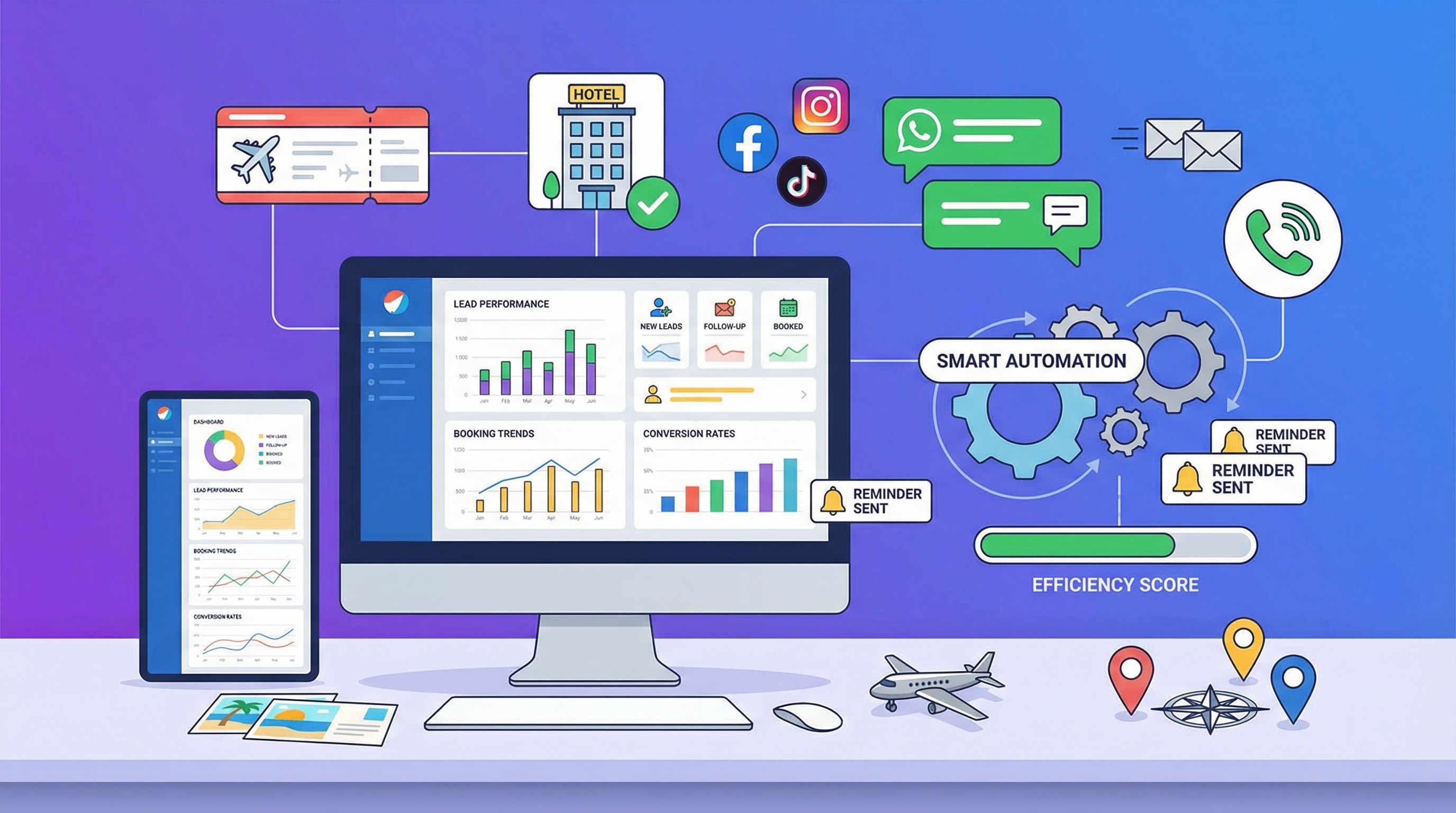
Across many businesses we worked with, one challenge kept recurring: leads were scattered across various channels—Meta ads, website forms, Google Sheets, and call dashboards—and teams were struggling to keep them organized. Follow-ups were being missed, managers had no clear visibility, and agents were working across too many tools.
To solve these real-world problems, our team developed a fully integrated Lead Management System (LMS) that consolidates every lead source and action into a single, user-friendly CRM. It’s a solution we now offer as part of our custom CRM development services, built specifically for businesses looking to streamline their sales process.
Building One System for All Lead Sources
The foundation of this CRM is simple: wherever leads are generated, they should land in one place instantly.
Instead of logging into multiple tools and manually updating sheets, teams get a centralized hub where data flows automatically.
Our system supports:
- Manual lead entry through a clean form.
- Direct integration with Meta (Facebook/Instagram) lead forms.
- Google Sheets syncing for teams who still use spreadsheets.
- API-based integration for websites, landing pages, or third-party systems.
This ensures businesses never lose a lead and never waste time copying data across platforms.
Integrated Call Manager for Real-Time Call Tracking
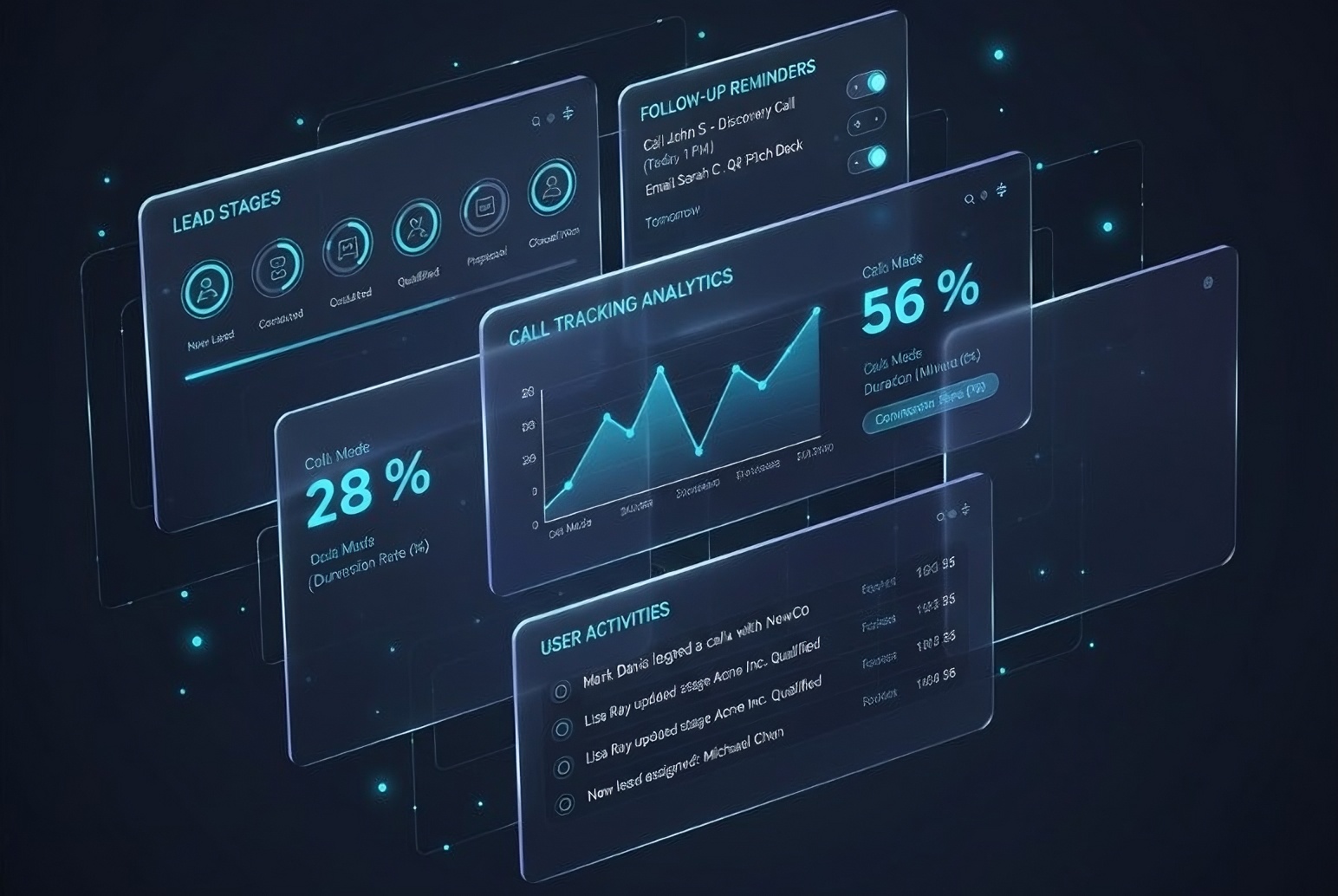
While building this system, we noticed that calls were often the most ignored part of the sales workflow. Many businesses receive dozens—or hundreds—of calls daily, but hardly any CRM captures them properly.
So we integrated a third-party call manager directly inside the CRM, allowing users to:
- Track total incoming calls
- Identify missed calls
- Check whether a follow-up log exists
- Filter call data by date
- Convert calls into leads instantly
For management, this has become one of the most valuable features because it shows exactly how many opportunities were attended and how many were missed.
A Clean and Trackable Lead Journey
We focused heavily on making the lead journey transparent.
Instead of updating scattered notes or relying on memory, agents can easily track what stage each lead is in and what action has been taken.
The CRM allows:
- Stage-based lead tracking (from new to follow-up to converted)
- Reopening of closed leads whenever needed
- Adding logs for calls, meetings, chats, or emails
- Automated email alerts for new lead assignments and follow-up reminders
This ensures every touchpoint is recorded, every follow-up is visible, and teams stay aligned on what needs attention.
Role-Based Access & Lead Distribution
The system uses a multi-level role structure so businesses can control access and maintain data security.
Admins can assign leads to agents, manage settings, handle integrations, and view all reports. Managers get visibility into their team’s activities, while agents only see leads assigned to them.
This prevents data leakage, improves accountability, and keeps the workflow clean—especially in growing teams.
The CRM supports up to 50 users for free, making it suitable for startups, agencies, and mid-sized teams.
Reports That Help Businesses Take Better Decisions
One of the biggest priorities for our team was making reporting fast and meaningful. Businesses shouldn’t have to export spreadsheets and spend hours analyzing performance.
The CRM includes:
- Performance reports showing agent activity, follow-ups, and conversion patterns
- Sales reports that display stage movement, funnel health, and revenue potential
- Call reports that highlight attended calls, missed calls, and call-to-lead conversion
These insights help owners and managers understand exactly where improvement is needed.
Why We Built It — And Why Businesses Use It
The lead management system reflects years of working with companies that needed something simpler, faster, and more reliable than traditional CRMs. Instead of giving them a generic tool, we built a solution based on real challenges: missed leads, slow follow-ups, scattered data, and poor visibility.
Today, we offer this system as a part of our custom CRM solutions. Businesses trust it because it mirrors real workflows, supports important integrations, and makes it easy for teams to stay organized.
See the Full Case Study
The detailed breakdown, screenshots, and real usage example are available here:https://thenightmarketer.com/leadnests. It shows how this system helps teams respond faster, track leads more accurately, and improve sales performance within weeks.