In short
- AI tools like Claude help speed up blog writing and SEO optimisation.
- Clear prompts help Claude generate better outlines, keywords, and blog structures.
- Keyword research prompts can uncover long-tail and semantic search opportunities.
- Structured outlines improve readability and help search engines understand your content.
- Featured snippet prompts can increase your chances of appearing in Google’s answer boxes.
- Updating old content with AI insights keeps blogs fresh and competitive.
- Internal linking strategies strengthen SEO and improve site navigation.
- Engaging headlines and introductions improve click-through rates and reader engagement.
- FAQ sections help target voice search and “People Also Ask” queries.
- Combining AI efficiency with human expertise produces stronger SEO content.
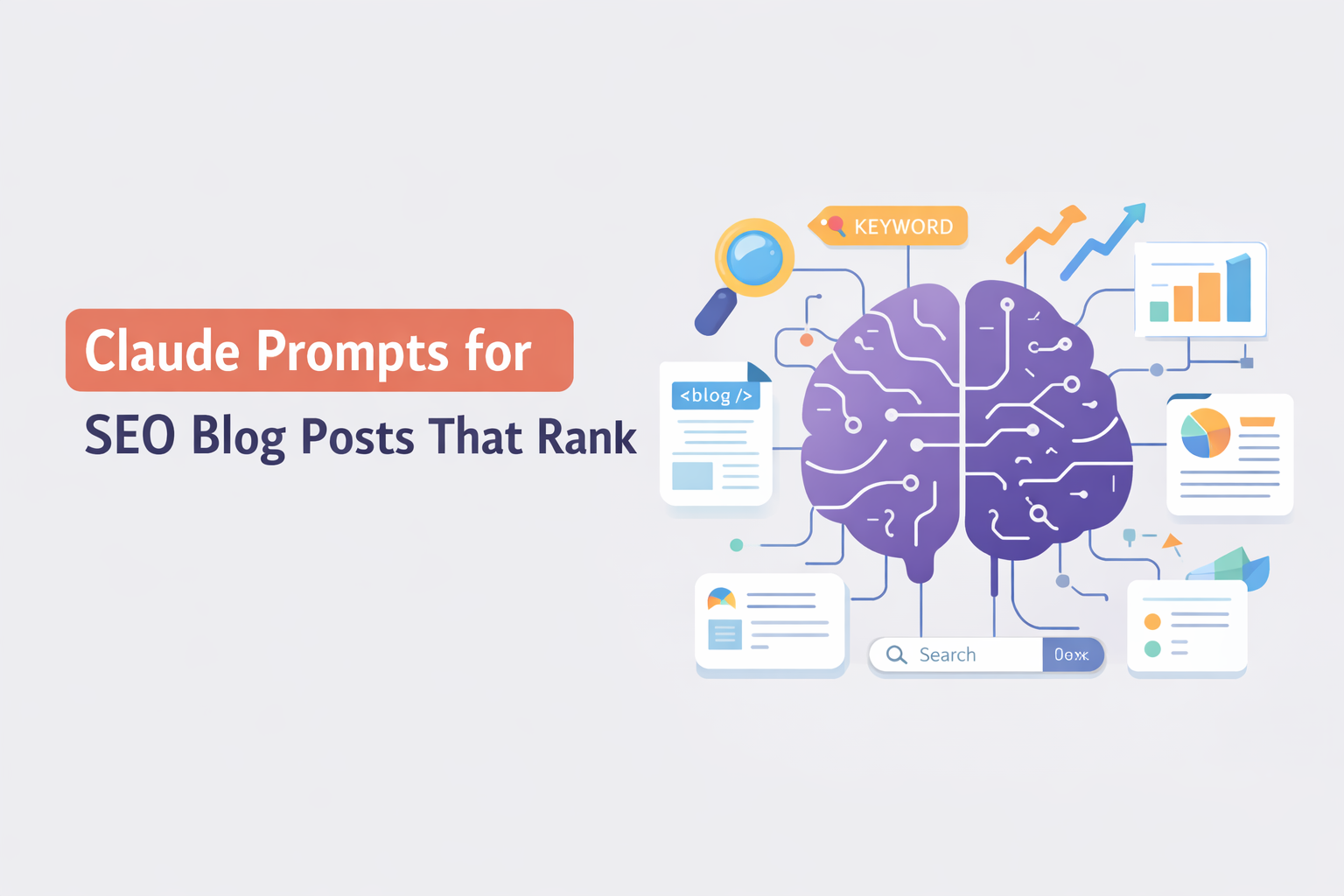
Artificial intelligence is revolutionising blogging. A NIPSTec guide notes that AI helps marketers publish more content and reduce costs while automating time‑consuming tasks such as outlines, drafts and headlines. The secret to success is writing clear, specific prompts, so tools like Claude understand your topic, audience, and structure. Below are ten Claude prompts for SEO (Search Engine Optimisation) blog writing that will accelerate your workflow, improve keyword optimisation, and boost Google rankings.
SEO Blog Post Creator Prompt
What it does: Use this when you need Claude to produce a full SEO‑optimised blog post with headings and keywords.
Write a comprehensive blog post about [topic] targeting “[primary keyword]”. Include a catchy introduction, H2 sections and bullet points. Insert [related keywords] naturally and ensure the content reads smoothly.
Tip: Fill in the placeholders with your topic and keywords. After Claude generates the draft, edit for factual accuracy and add your personal insights to meet E‑E‑A‑T standards.
Keyword Optimization Prompt
What it does: Use this to have Claude perform keyword research and propose long‑tail terms you can weave into your article.
Act as an SEO research assistant. For “[topic]”, list 10 long‑tail and semantic keywords with intent (informational, navigational, transactional) and suggest how to incorporate each naturally into the post.
Tip: Mix high‑ and low‑competition keywords to enrich headings and paragraphs and target a broader range of search queries.
Blog Outline Generator Prompt
What it does: Use this to produce an organised outline with headings and subtopics for your blog post.
Create an SEO blog outline for “[topic]”. Include an introduction, at least five H2 sections with bullet points about what to cover, and suggest semantic keywords and reader questions.
Tip: Tell Claude who your audience is and any subtopics you want included so the outline matches your goals.
Featured Snippet Response Prompt
What it does: Use this to craft a concise answer for a featured snippet.
Compose a 40‑60 word answer to “[user question]” designed for a featured snippet. Provide a clear definition or simple step‑by‑step list and use “[primary keyword]” naturally.
Tip: Position your answer near the top of the article and wrap it in appropriate HTML tags so search engines can extract it easily.
Content Update Analysis Prompt
What it does: Use this to review an existing post and suggest updates so your content stays fresh.
Review my existing blog post on “[topic]” (summary: [brief summary]). Identify outdated information or statistics, then recommend updated data points, new subtopics and emerging trends. Suggest fresh keywords and internal links to improve SEO.
Tip: Provide a brief summary and publication date so Claude knows what to focus on when refreshing your content.
Internal Linking Strategy Prompt
What it does: Internal links help search engines understand your site and distribute authority. Use this to plan a linking strategy that improves crawlability and rankings.
Analyze the published articles on my website [domain] related to “[topic]”. Suggest an internal linking strategy to improve rankings for the keyword “[target keyword]”. Provide five internal link recommendations with anchor text and destination URLs and explain why each benefits the user and SEO.
Tip: Give Claude a sitemap or a list of articles. After adding the links, monitor metrics like bounce rate and time on page to gauge impact.
SEO Headline Generator Prompt
What it does: Headlines influence click‑through rates. Use this to generate eye‑catching, keyword‑rich titles.
Generate 10 compelling blog post titles about “[topic]” that include “[primary keyword]”. Keep them under 60 characters, evoke curiosity or emotion and clearly convey the benefit of reading the post.
Tip: Experiment with different headline styles (how‑to, listicle, question, benefit‑focused) to discover what resonates with your audience.
Content Cluster & Pillar Prompt
What it does: Building topical authority requires creating clusters of related articles around a pillar page. Use this to design a pillar content strategy with supporting cluster articles.
For the main topic “[broad topic]”, create a content cluster. Identify one pillar article and six supporting blog post topics. Describe how each supporting post links back to the pillar and to other posts within the cluster. Include suggested target keywords and search intent for each article.
Tip: Use this prompt when developing a long‑term content strategy. Update the pillar page regularly and ensure all cluster articles link back to it and to one another.
Engaging Blog Introduction Prompt
What it does: Introductions hook readers. Use this to craft an engaging opening that addresses pain points and includes keywords.
Write an engaging introduction for a blog post about “[topic]” targeting “[primary keyword]”. Start with a question or startling statistic, acknowledge the reader’s pain point and preview what the article will cover. Keep it under 150 words and include the primary keyword naturally.
Tip: Provide a statistic or interesting fact for Claude to use in the hook. A strong opening line encourages readers to continue.
SEO FAQ Builder Prompt
What it does: FAQ sections address common questions and can rank for voice search. Use this to build a structured FAQ section with keywords.
Create an FAQ section for a blog post on “[topic]”. List 5–7 common questions and provide brief answers. Incorporate “[primary keyword]” in at least two questions and answers. Format each question as an H3 heading with a short answer beneath.
Tip: Use Google’s “People Also Ask” to find real questions. FAQs improve user experience and increase the chances of appearing in rich results.
Tips for Getting the Best Results from Claude Prompts
Crafting effective prompts takes practice. Follow these guidelines to ensure Claude delivers high‑quality, SEO‑friendly content:
- Be specific: Define the content type, topic, audience, tone and length. Clear instructions produce more accurate results.
- Include keywords and parameters: Specify primary and secondary keywords, desired word count, headings and style elements so AI can optimise for search and readability.
- Iterate and refine: Review the AI’s output for factual accuracy, edit as needed and tweak your prompt based on what you learn.
- Combine human and AI strengths: Use Claude to speed up drafting and optimisation, but add your unique insights and creativity.
Conclusion
Artificial intelligence makes content creation faster, but success still depends on using the right prompts. With these Claude prompts for SEO — covering keyword research, outlines, snippets, updates, linking strategies, headlines, clusters, introductions, and FAQs — you can create blog posts that are better optimized for Google.
However, prompts alone aren’t enough. A strong SEO strategy, proper keyword targeting, and optimized content structure are essential for ranking and driving traffic.
Need help creating SEO blogs that rank and convert?
Our team helps businesses create SEO-optimized, conversion-focused content that drives real results. Contact us today to grow your traffic and scale your content strategy. 🚀