In short
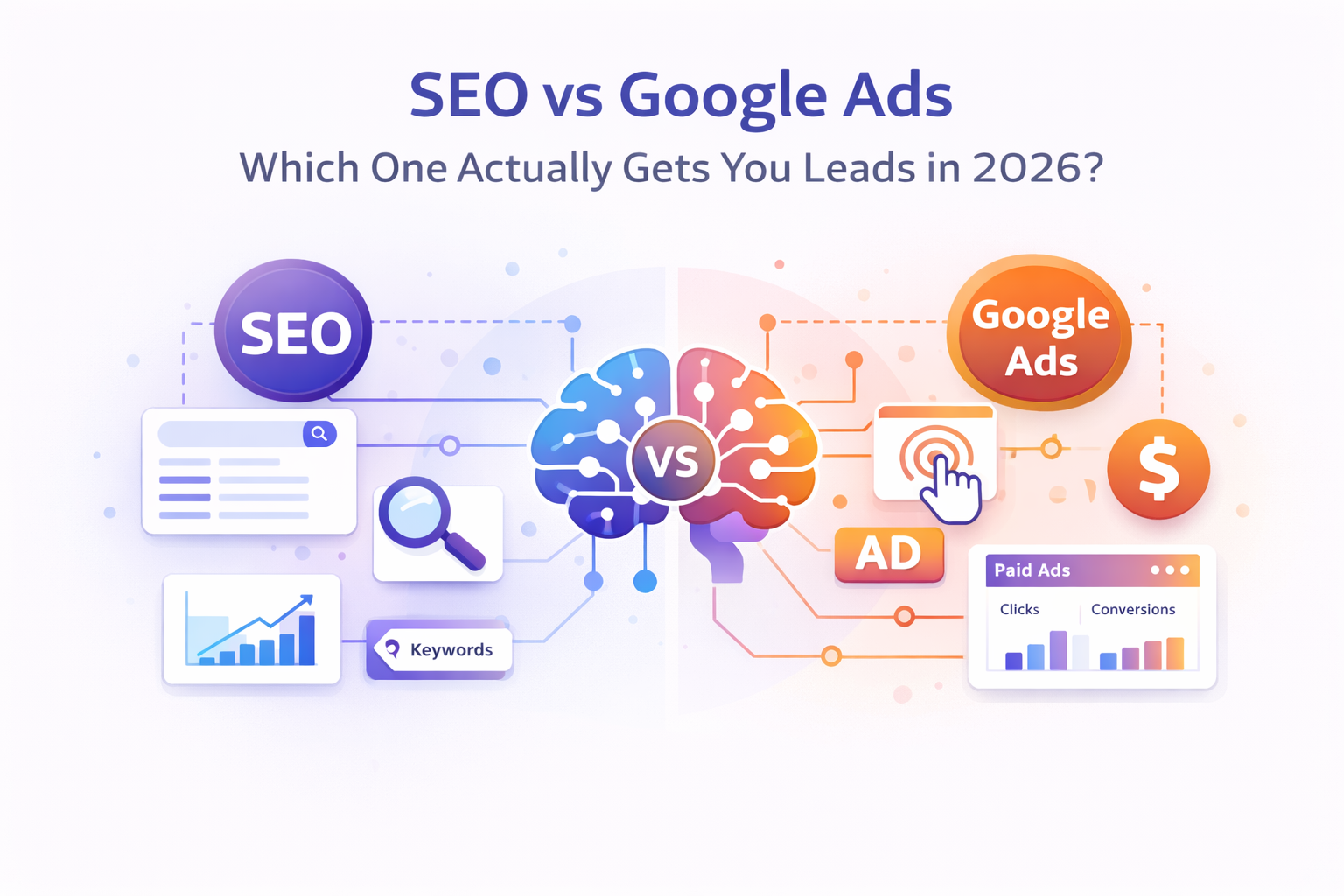
- SEO and Google Ads both generate leads, but they work differently in terms of speed, cost, and long-term impact.
- SEO (Search Engine Optimization) helps your website rank on Google’s organic results, bringing consistent and long-term free traffic when customers search for your services.
- The biggest benefit of SEO is compounding value — once your pages rank, they can generate leads for months or even years without additional advertising spend.
- SEO takes time to show results, usually around 3–6 months, because it requires content creation, technical optimization, and link building.
- Google Ads (PPC) allows your business to appear at the top of Google search results instantly by paying for clicks on targeted keywords.
- The main advantage of Google Ads is speed — campaigns can start generating leads within 24 hours.
- The limitation of Google Ads is cost dependency — once you stop paying for ads, the traffic and leads stop immediately.
- The best strategy in 2026 is combining both — use Google Ads for immediate leads while SEO builds long-term organic traffic and sustainable growth.
You are running a business. You want leads. And every marketing expert you talk to gives you a different answer — some say invest in SEO, others say run Google Ads. So which one actually works better? Which one will get your phone ringing and your inbox full in 2026?
The truth is both strategies work — but they work differently, for different business situations, and at different speeds. In this blog we will break down exactly how each one works, what it costs, and which one is right for YOUR business right now.
What is SEO and How Does It Generate Leads?
SEO — Search Engine Optimization — is the process of optimizing your website so that Google ranks it on page 1 when your potential customers search for your product or service. When done correctly, SEO brings a consistent, growing stream of free traffic to your website every single day.
The Power of Compounding Traffic
The biggest advantage of SEO is compounding value. A well-optimized blog post or service page can bring leads for months or even years without any additional spend. Once you rank, you own that traffic. Your competitor cannot simply outbid you to take it away. Think of SEO like a savings account — slow to build, but the interest keeps growing whether you add to it or not.
The Honest Challenge of SEO
The challenge is time. SEO typically takes 3 to 6 months before you start seeing significant results. It requires consistent content creation, technical website work, and link building. But the long-term ROI is exceptional — businesses that invest in SEO consistently report it as their single highest-returning marketing channel over a 12-month period.
What are Google Ads and How Do They Generate Leads?
Google Ads — also known as Pay Per Click or PPC — puts your business at the very top of Google search results immediately. You choose keywords, set a daily budget, and your ad appears when people search for those terms. You only pay when someone actually clicks your ad.
The Speed Advantage Nobody Can Beat
The biggest advantage of Google Ads is speed. You can have a campaign live today and start receiving leads by tomorrow. For businesses launching a new product, promoting a time-sensitive offer, or entering a highly competitive market, Google Ads provides instant visibility that SEO simply cannot match in the short term. When you need the phone to ring this week, Ads win every single time.
The Hidden Cost of Paying Per Click
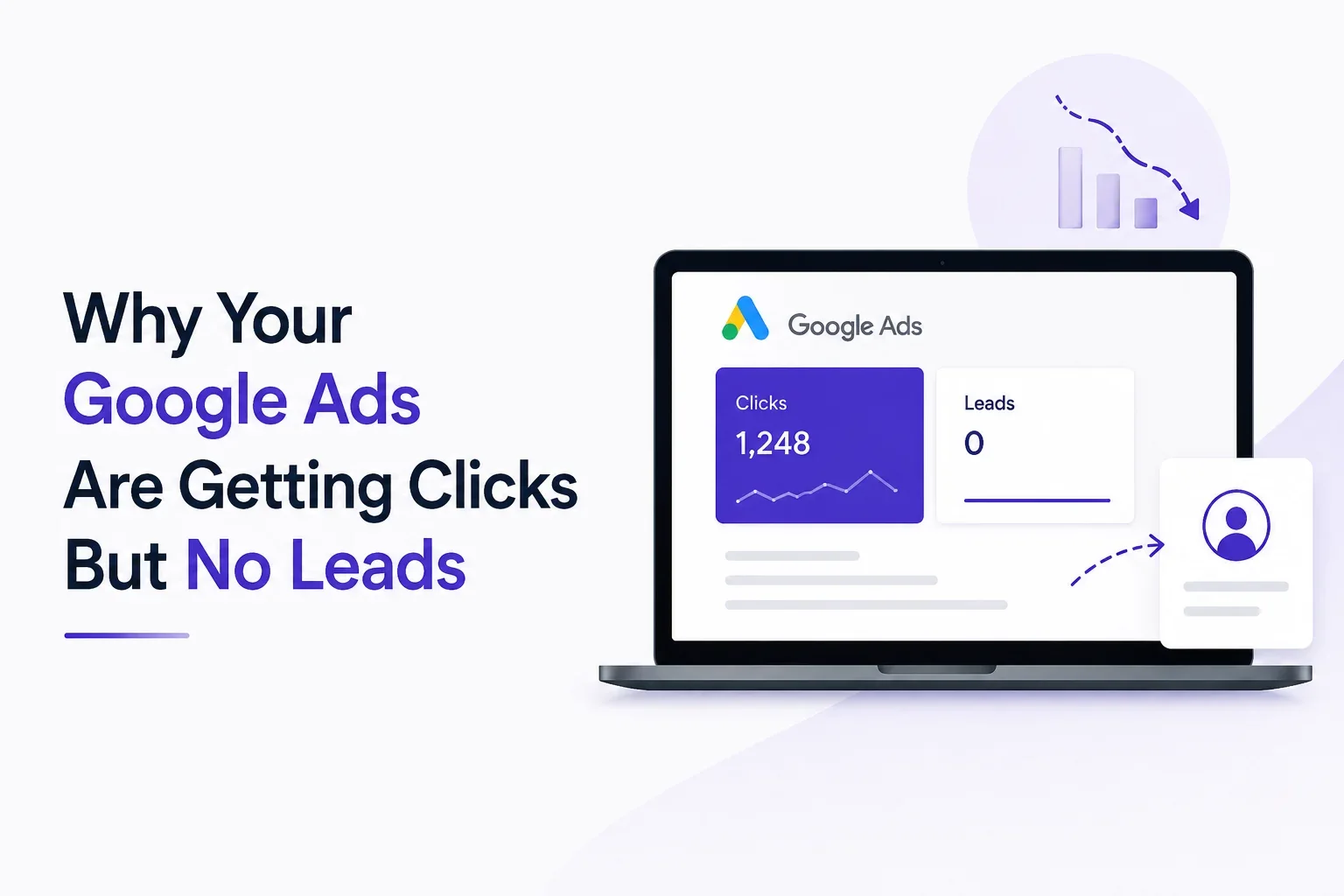
The challenge is cost dependency. The moment you stop paying, the traffic stops completely. Over time, as more competitors enter your market, cost per click rises. Without expert campaign management, budgets can drain very quickly on clicks that never convert into actual enquiries. Google Ads rewards businesses that constantly test, refine, and optimize — it is not a set-and-forget system.
SEO vs Google Ads — The Direct Comparison
| Factor | 🌱 SEO | ⚡ Google Ads | Winner |
|---|---|---|---|
| Speed to First Lead | 3–6 months to see results | Leads within 24 hours | Google Ads |
| Long-Term Cost | Free traffic once established | Stop paying = stop getting leads | SEO |
| User Trust | 70%+ users click organic results | Paid label reduces trust for some | SEO |
| ROI Over 12 Months | Significantly higher return | Moderate — requires ongoing spend | SEO |
| Traffic Sustainability | Rankings persist without spend | Traffic stops when budget pauses | SEO |
| Flexibility and Control | Limited short-term adjustments | Full real-time budget and targeting control | Google Ads |
| Best For | Long-term pipeline building | New launches, seasonal offers, fast testing | Depends on goal |
Which Should YOU Choose Right Now?
| Your Situation | Go SEO | Go Google Ads |
|---|---|---|
| Just launched, need leads this week | ✗ | ✓ |
| Building a 12-month growth engine | ✓ | ✗ |
| Running a seasonal promotion | ✗ | ✓ |
| Limited budget, need max long-term value | ✓ | ✗ |
| Highly competitive market, need visibility now | ✗ | ✓ |
| Testing a new product or market | ✗ | ✓ |
| Building brand authority and trust | ✓ | ✗ |
| Scaling with a consistent monthly lead pipeline | ✓ | Use as bridge |
Why Most Businesses Make the Wrong Choice
Most business owners make this decision based on what they heard last — from a friend, a YouTube video, or a salesperson pitching their own service. The result is either wasted ad spend on campaigns that were never properly set up, or months of waiting for SEO results while the business runs dry on leads.
The Trap of Thinking Short-Term
Businesses that only run Google Ads often find themselves stuck on an expensive treadmill. The leads come in, but so do the invoices. The moment cash flow tightens and the budget gets paused, everything stops. There is no asset left behind, no rankings, no content, no lasting visibility. Every rupee spent on Ads has a shelf life of exactly zero days after the budget runs out.
The Trap of Thinking Too Long-Term
On the other side, businesses that invest only in SEO and ignore Ads in the early months often run out of patience — or worse, run out of money — before the results arrive. SEO without a short-term lead strategy is a gamble that many small businesses simply cannot afford to take.
The Winning Strategy in 2026
The smartest businesses in 2026 are not choosing one or the other — they are combining both strategically. This is not a compromise. It is a deliberate system built to deliver leads at every stage of business growth.
Phase 1 — Month 1 to 3: Run Ads, Build SEO Foundation
Launch Google Ads immediately to generate leads while your SEO groundwork is being laid. Use the data from your Ads — which keywords convert, which audiences respond — to inform your SEO content strategy. Every click you pay for is also a data point you can use for free later.
Phase 2 — Month 3 to 6: Both Channels Working Together
Your SEO starts building momentum. Optimized pages begin ranking. Blog content starts attracting organic traffic. You now have two channels delivering leads simultaneously — paid and organic reinforcing each other. This is the period where your cost per lead begins to drop.
Phase 3 — Month 6 and Beyond: Let SEO Carry the Weight
As your organic rankings establish themselves, gradually reduce your ad spend and redirect that budget into more content and link building. Your traffic compounds. Your cost per lead continues to fall. Your pipeline becomes self-sustaining rather than spend-dependent.
The Bottom Line
This combined approach is what separates businesses that constantly struggle to generate leads from businesses that have a consistently full pipeline every single month. It is not about SEO versus Google Ads. It is about using the right tool at the right time — and having the strategy to know exactly when to shift your weight from one to the other.