In short
- Premium branding today is about authority, trust, and emotional resonance, not just visuals.
- ChatGPT can act as a complete brand strategist when guided with structured prompts.
- A Master Prompt helps create a full brand system: voice, visuals, audience, and strategy.
- Specialized prompts refine key areas like visual identity, brand voice, and content strategy.
- The best brands balance AI efficiency with human authenticity.
- Modern brand identities are becoming adaptive, sensory, and experience-driven.
- Consistency across platforms increases visibility not just for users—but for AI search systems.
Understanding Premium Branding in the Age of AI
The way people discover and choose brands is changing fast. According to The Branding Journal, AI agents are becoming new gatekeepers that recommend and filter products, meaning it is no longer enough to be visible online simply. Brands must earn trust and authority so that AI models “see them as credible and authoritative”. The same report notes that consumers crave authenticity; people want to know the humans behind the brand and respond to real stories and imperfections. In visual design, logos and identity systems are evolving from fixed symbols to adaptive, sensory experiences. Textures, motion and sound create depth and feeling. Designers are embracing imperfection, collage and expressive typography to make identities feel more human and less machine‑made.
A premium brand identity in this AI‑mediated landscape is therefore more than an attractive logo; it is a holistic system that:
- Establishes credibility and authority so AI agents favour it.
- Blends human and AI contributions to achieve both consistency and authenticity.
- Evokes emotions through adaptive visuals, sound and narrative.
- Embraces imperfection and co‑creation with its audience.
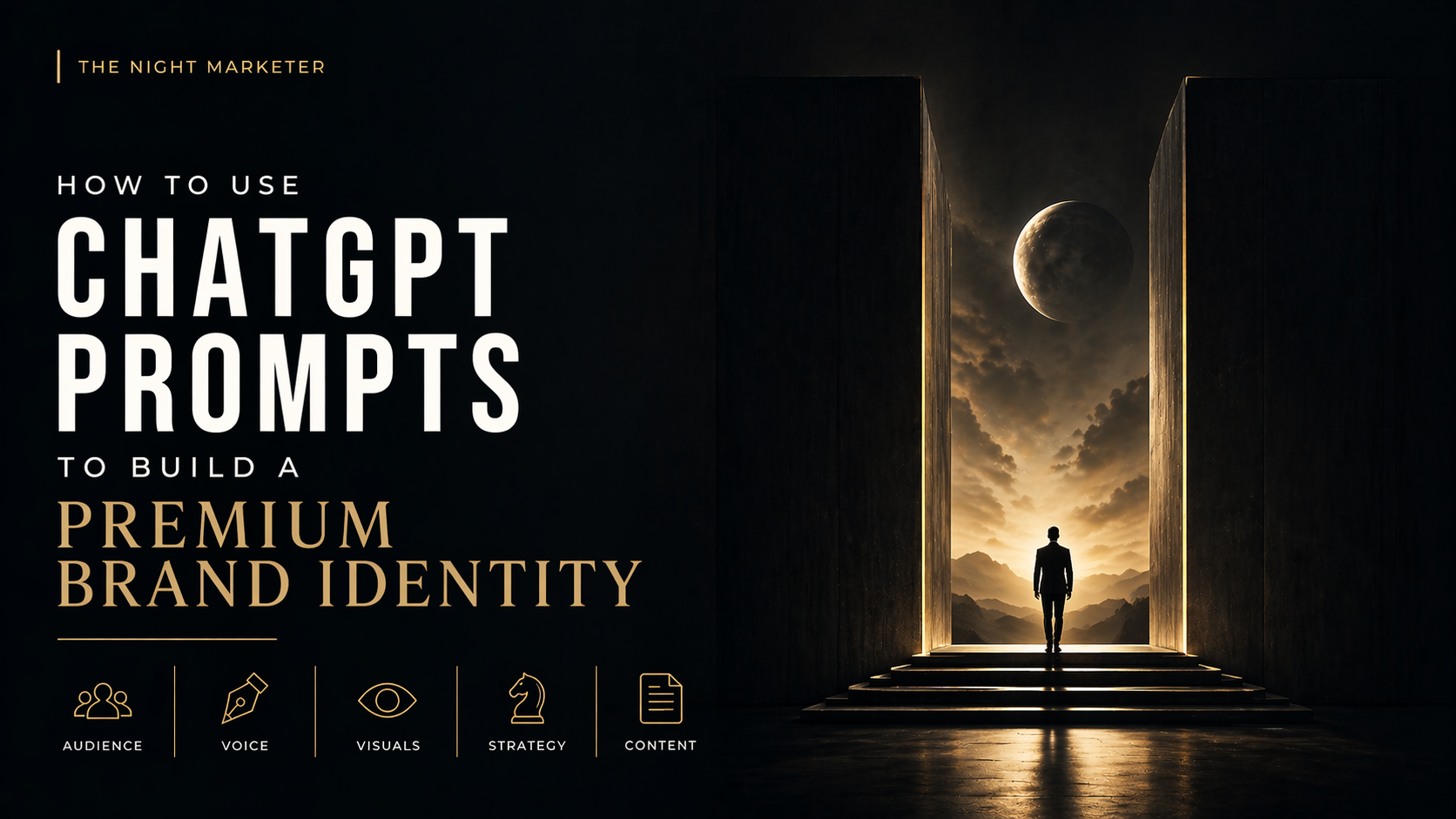
This elevated approach demands clear creative direction. Generative AI tools like ChatGPT can help structure the brand, but they are only as good as the prompts they receive. The following sections explain how to harness AI thoughtfully and present prompts that support a cinematic, minimalist and authoritative brand identity mirroring the dark, high‑contrast aesthetic of The Night Marketer, which uses deep tones, gold accents and generous white space for a luxurious yet understated look referencing the digital presence at thenightmarketer.com.
The Master Prompt: A Framework for Brand Creation
A single, carefully structured prompt can guide ChatGPT through building a complete brand identity. This master prompt acts like a creative brief. Customize the bracketed sections with your brand’s specifics (e.g., values, audience, niche). Use a conversational tone and ask ChatGPT to ask clarifying questions before generating outputs.
Master Prompt:
“You are a world‑class brand strategist and AI consultant. I want you to help create a premium brand identity for my company. Here’s our background: we are [industry/niche]; we exist to [mission statement], and our core values are [values]. Our target audience is [demographic/psychographic details]. We admire brands like [inspiration], and we want a visual style that feels [adjectives, e.g., minimalist, cinematic, luxurious] along with a voice that sounds [tone, e.g., authoritative yet conversational]. Based on these inputs, ask me any questions needed to clarify our vision. Then produce a comprehensive brand identity document that includes:
-
A brand story and key message pillars
-
A brand personality (archetype) and voice/tone guidelines
-
Audience personas with needs and desires
-
Visual direction (logo concept suggestions, colour palette, typography recommendations and mood board description)
-
A tagline and slogan ideas
-
Content themes and storytelling frameworks suitable for our audience and platforms
*Ensure that every recommendation aligns with our mission and values. Explain the rationale behind your choices. Where appropriate, provide options and justify them. Structure your response with clear headings so we can share it with our design and marketing teams.”
This master prompt ensures that ChatGPT returns a structured and comprehensive brand blueprint. By requesting clarifying questions up front and asking for rationale behind recommendations, you maintain control and avoid generic output.
Five specialized sub‑prompts for Different Branding Areas
Once you have a high‑level brand framework, use focused prompts to refine specific aspects. Each sub‑prompt feeds ChatGPT additional detail and asks for a polished output that matches your desired tone.
1. Visual Identity
“Act as an award‑winning art director. Using the brand story and values we defined, develop a visual identity. Suggest three logo concepts (describe shapes, symbolism and style), a refined colour palette with HEX codes that conveys [desired mood], and two complementary font pairings that balance elegance and readability. Also describe a mood board's textures, photography style, and motion that captures a cinematic, minimalist look reminiscent of luxury websites with dark backgrounds and gold accents, like thenightmarketer.com. Explain why each choice suits our audience and values.”
2. Brand Voice and Tone
“Imagine you’re a renowned copywriter. Craft a brand voice guide. Define our brand’s personality, tone and language style (e.g., formal vs. conversational, inclusive vs. exclusive). Provide a vocabulary list of signature words and phrases, and write sample sentences that show how we speak on social media, in emails and on our website. Ensure that the voice feels authoritative and premium yet approachable, reflecting the human authenticity consumers crave.”
3. Brand Strategy
“You are a strategic brand consultant. Given our mission and audience, outline a brand strategy for the next 12 months. Detail positioning (how we differentiate), value propositions, and key messaging pillars that build authority and trust in an AI‑mediated marketplace. Suggest partnerships, content collaborations or community initiatives that highlight the human side of our brand. Include both quick wins and long‑term initiatives that strengthen credibility with AI agents and human consumers.”
4. Audience & Persona Development
“Act as an anthropologist and marketing researcher. Create three detailed audience personas for our brand based on [demographic/psychographic inputs]. Describe each persona’s goals, frustrations, media habits and how they perceive premium brands. Explain how our brand can address their emotional needs (e.g., trust, exclusivity, and innovation). Reference the trend that consumers are moving toward owned platforms and co‑creation; suggest how our brand can invite these personas into our community and content creation.”
5. Content & Storytelling
“You are an editorial director. Using our brand voice and strategy, develop a content plan. Define 3–5 core narrative themes that resonate with our audience and reflect our values. For each theme, propose blog, video and social post ideas that balance polished visuals with human authenticity. Recommend ways to incorporate sensory experiences – sound, texture, and motion – into our digital storytelling. Provide a 60‑day content calendar outline that sequences these pieces to build momentum and authority over time.”
Best Practices for Using AI Prompts
- Be Specific and Contextual. The more detailed your inputs (values, goals, audience), the more tailored the outputs will be. Without context, AI defaults to generic clichés.
- Iterate and Refine. Use the master prompt first, then iterate with sub‑prompts. Review the AI’s suggestions, choose what resonates, and ask for revisions. This collaborative process blends human judgment with AI speed.
- Balance AI and Human Input. The Branding Journal notes a tension between AI‑generated and human‑made content; brands must “find the right balance between technology and human presence”. Use AI for structure and inspiration, but infuse real stories, imperfections, and lived experience to build trust.
- Stay Adaptable. Brand identities are becoming fluid and sensory. Encourage the AI to propose variations rather than rigid rules. Experiment with motion, sound and texture to create a brand that feels alive.
- Own Your Platforms and Community. As social algorithms become unpredictable, invest in owned channels like newsletters and community platforms. Use AI to generate content ideas, but prioritize direct relationships with your audience.
Conclusion: Elevating Your Brand with Strategic Partnership
In an age where AI agents decide which brands to trust, how do you make your identity stand out? The secret to a premium brand in 2026 isn't just a great logo; it's a synergy of human authenticity, strategic narrative, and AI authority. You must master the blend of high-tech and lived experience. Ready to stop guessing and start scaling? If you're serious about creating experiences that move people and build trust in AI, you need a partner who speaks both languages. Discover how The Night Marketer's decade-plus expertise in SEO, Shopify, UI/UX, and bespoke AI Agent Development can turn your digital footprint into a powerhouse. Learn more about elevating your brand today.