In short
- Name the sender, receiver and person accountable during review.
- Record acceptance separately from owner assignment.
- Test missing information, absence and multi-team enquiries.
- Review waiting time with rejection reasons and commercial outcomes.
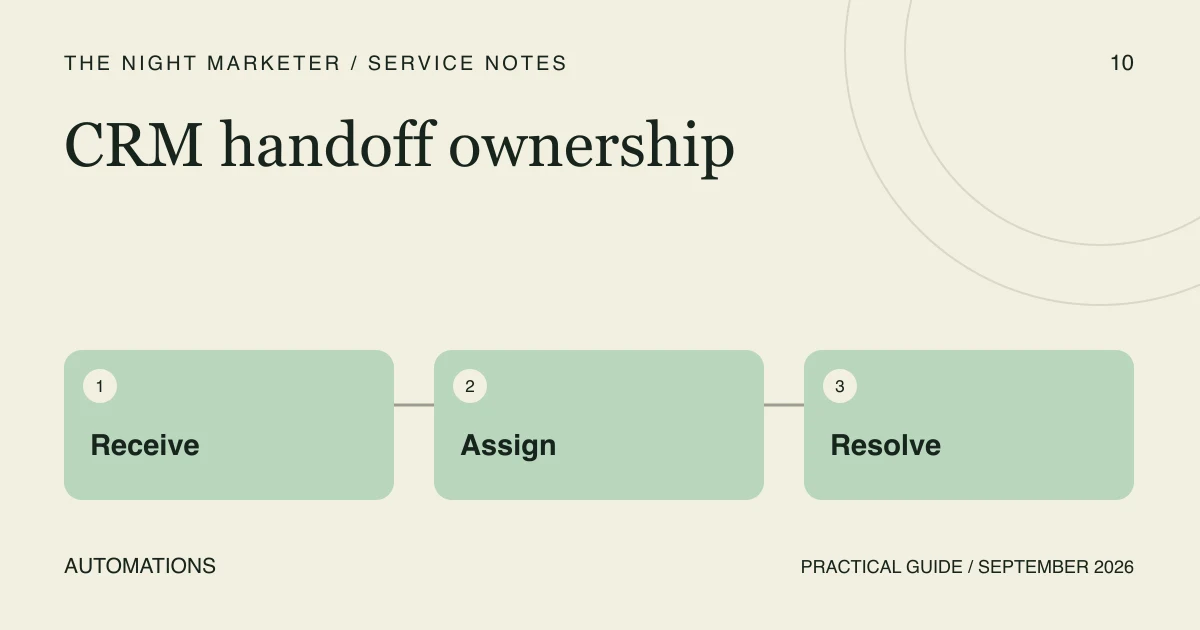
In an illustrative CRM workflow, every enquiry has a record but nobody can explain who must act next. CRM handoff ownership needs an accountable sender, a receiving role and a visible acceptance decision. Start with that transition before adding another dashboard.
Define what changes hands
For each transition, specify the minimum information, the sending role and the receiving role. A marketing-qualified lead, a sales-accepted lead and a signed project are different objects of work. State what allows the receiving team to accept or reject the handoff. Avoid a single miscellaneous status that hides whether information is missing, ownership is unclear or a customer has declined.
Design for absence and exceptions
What happens when the assigned person is away, a required field is missing or a lead belongs to two service teams? Make reassignment and escalation explicit. Record why a record moved, not only its latest owner. Set review expectations that match the business rather than copying a universal response-time target. Alerts should identify the action required and link to the record; a stream of generic notifications can become another ignored inbox.
Measure stalled transitions
Track how long records wait between stages, the share rejected for missing information and the number of manual reassignments. Pair these with commercial outcomes so faster movement does not become the only objective. A team can shorten a queue by closing records prematurely. Review a sample of actual handoffs with the people doing the work before automating the next stage. Permissions should still restrict confidential customer and commercial fields to appropriate roles.
Write one handoff contract the teams can test
For a qualified enquiry moving from marketing to sales, record the following fields in a shared template. Set response expectations with the actual team and working hours.
- Ready to send: contact context, requested service, consent or contact restrictions and the reason for qualification are present.
- Accountable owner: a named person owns the enquiry while the receiving team reviews it. Define who covers absence.
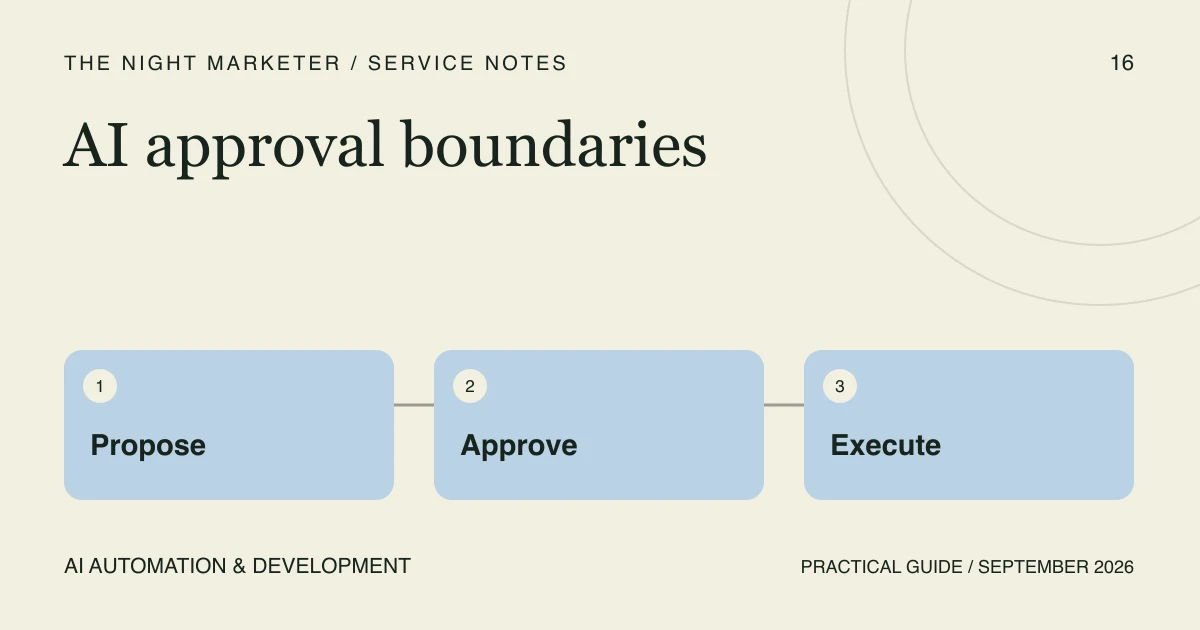
- Acceptance: the receiver records acceptance or returns the enquiry with a specific reason. Merely changing an owner field does not complete this decision.
- Escalation: an overdue acceptance enters a named review queue. Preserve the sender, prior owner, timestamp and reason for each reassignment.
For example, HubSpot documents record owner assignment. Keep your business acceptance decision explicit alongside the platform’s owner field.
Run the handoff through three exceptions
Test a missing contact detail, an absent receiver and an enquiry needing two specialists. Each should end with one accountable coordinator, a visible next action and an explanation of any rejected transition. Check access using the roles that will perform the work.
Illustrative example: an enquiry needs two specialists
A website enquiry that asks about both development and retention should not be copied into two disconnected pipelines without a shared owner. Assign one accountable coordinator, then create clearly linked specialist tasks where necessary.
Make CRM ownership visible
Use our custom CRM planning guide to map the wider sales process. Bring one stalled enquiry journey and the roles that own it to the first review. The Night Marketer can help scope this work through our CRM development and integration.
Frequently asked questions
Assignment records responsibility in the tool. Capture acceptance as a separate business decision, including any missing information or reason for returning the record.
Define working hours and a cover role with the team. Measure both elapsed waiting time and the agreed working-hours target so a weekend does not hide an unattended enquiry.
Use one accountable coordinator with linked specialist tasks. Record who contacts the customer and who can accept each task to prevent duplicate or conflicting follow-ups.