In short
- Define the outcome and information available at scoring time.
- Compare against a transparent rules baseline.
- Evaluate the queue at actual sales review capacity.
- Sample lower-ranked leads and retain a monitored fallback.
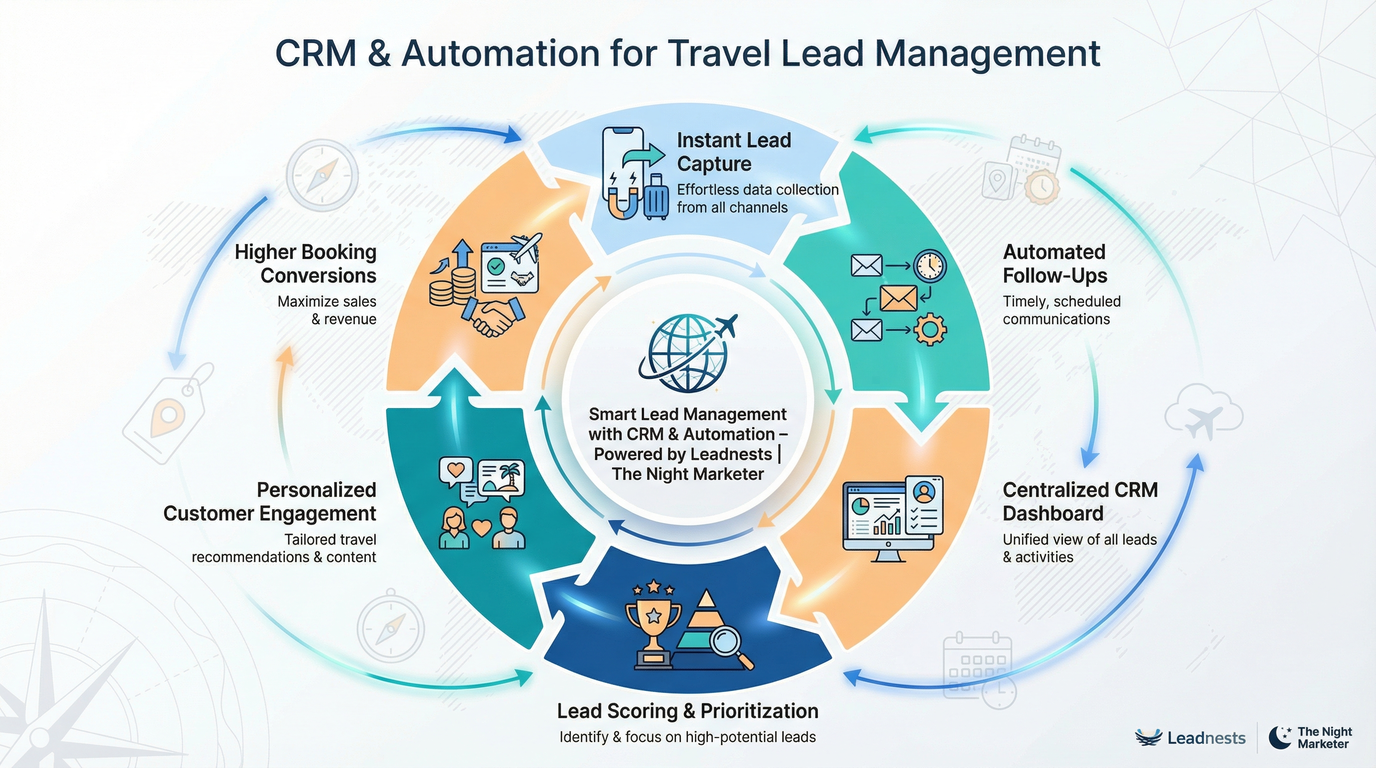
AI lead scoring ranks prospects using patterns in available customer and activity data. It helps organise attention, but a high score does not prove buying intent. Define the outcome, compare the model with a transparent baseline and evaluate whether the recommended queue produces more useful sales conversations at the team's actual capacity.
Separate fit, engagement and predicted intent
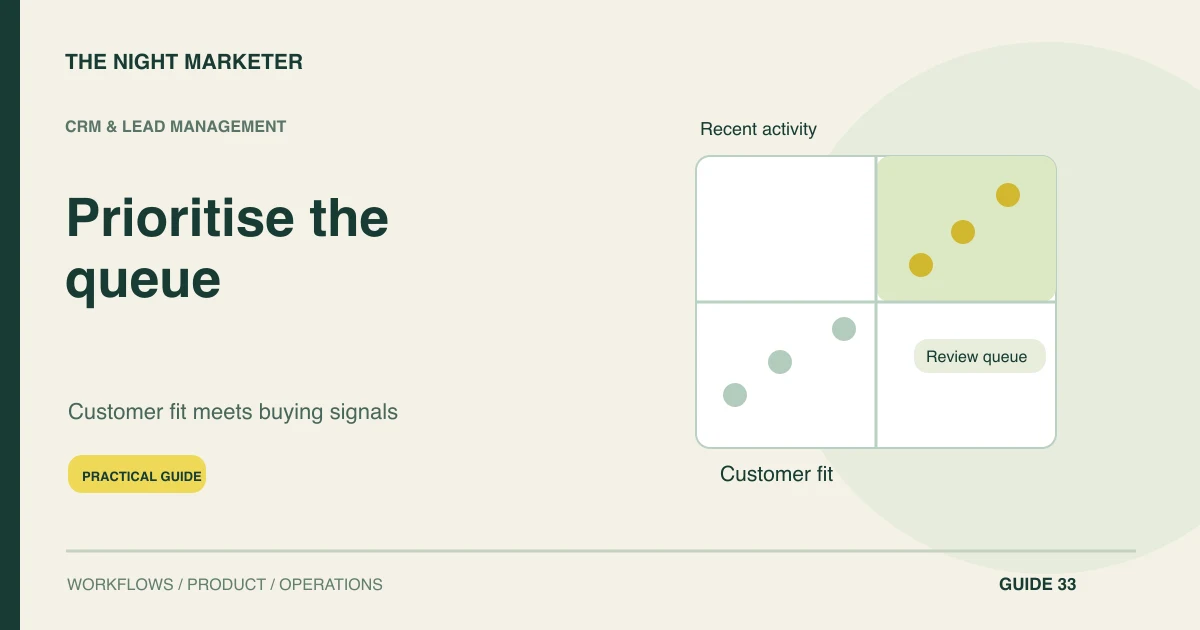
Separate fit, engagement and prediction. Fit describes whether an organisation matches the service you offer. Activity describes observed behaviour, such as a specific enquiry or recent meeting.
Prediction estimates a defined future outcome from historical examples. A strong-fit account can be inactive, and an active contact can be unsuitable. Keep these dimensions visible so representatives can understand why a prospect appears in their queue and challenge the recommendation.
Define the outcome and prediction window
Define the target and observation window before training. Qualified opportunity within an illustrative thirty-day window is different from eventually purchasing. Give records enough time to reach the outcome before labelling them negative.
Use only information that would have existed when the score was calculated. A contract status entered after conversion must not become an input to a pre-sale model, even if it makes a historical evaluation look impressive.
Clean the records and create a rules baseline
Audit identity, timestamps and outcome consistency. Duplicate contacts can spread one account across training and evaluation data. Changes in qualification definitions can make older examples incomparable.
Establish a simple rules baseline using agreed fit and recent activity, with unknown values handled explicitly. For a smaller queue, that may be sufficient. Choose the model's complexity from demonstrated value rather than assuming machine learning is always the next necessary step.
Evaluate on later leads at real sales capacity
Evaluate on later, unseen cohorts and prevent preprocessing from learning from the test set. Compare the top recommendations with the existing process at the same review capacity. If a representative can examine one hundred leads, assess that queue rather than an abstract overall accuracy figure.
Inspect precision, missed opportunities and differences across relevant segments. Treat a ranking score as a probability only if calibration has been separately evaluated.
Understand what the lead score does not tell you
Precision describes how many of the selected leads reach the defined outcome. Recall describes how many of all qualifying leads the selection finds. A business may accept a smaller queue with higher precision when representative time is limited, but it should still inspect missed prospects.
A score of 80 is not automatically an 80% conversion probability. For a simple operational starting point, review lead ownership, follow-ups and team reporting before adding a predictive layer. Prioritisation cannot compensate for a queue nobody owns, and a model should not delete leads just because they rank poorly.
Turn the score into an owned next action
Make the score lead to an owned action. A threshold can place a prospect in a review queue, create a task or request missing information. Check whether the team can handle that workload before enabling the trigger.
Retain a sample of lower-ranked records for review so false negatives remain visible. Representatives should record useful rejection reasons, such as wrong service fit, rather than simply dismissing the model as inaccurate.
Monitor missed leads and changing data
Monitor changes in lead sources, service offerings and representative behaviour after rollout. A model trained on last year's customer mix may rank a new segment poorly. Review correction reasons and outcome quality on a recurring basis, and keep a rollback to the baseline queue.
Scoring can support prioritisation, but it should not silently deny service or delete prospects. The operating owner needs authority to pause a deteriorating model.
Illustrative example: ranking within a fixed review capacity
Suppose an illustrative sales team can review one hundred enquiries in a period. Compare the model's top hundred with the current queue using comparable cohorts and a consistent qualification definition. Reserve some capacity to inspect a random sample below the threshold.
If the model finds more qualified opportunities but repeatedly misses a new industry, change the inputs or workflow before expanding it. No particular improvement percentage should be assumed before the test.
Make prioritisation useful before making it complex
Bring anonymised historical leads with source timestamps and outcome dates, the qualification definition and weekly review capacity to the first call. Begin with reliable labels, an owned queue and a fair comparison. Discuss lead-scoring integration requirements with TNM once the team can define the action, evidence and operating owner.
Frequently asked questions
There is no universal record count. Check how many mature positive and negative outcomes exist for each important segment and whether labels are consistent. Start with a rules queue when a model cannot yet be evaluated reliably.
Only report conversion probabilities after calibration has been evaluated on relevant later data. Otherwise describe the score as a ranking and explain which action it supports.
Give each record the agreed time to reach the target outcome. Keep recent unresolved leads separate and compare cohorts at similar maturity so delayed outcomes do not become false negatives.
Define a review trigger before rollout, such as missing input data or repeated missed opportunities in a relevant segment. Pause automated routing, investigate the failure and use the documented baseline while recovering.