
In short
- GEO helps ecommerce brands improve their visibility across AI-powered search and answer engines.
- Detailed, accurate product information makes products easier for AI systems to understand.
- Traditional SEO remains an important foundation for GEO.
- Product schema and structured data can help search engines interpret ecommerce information.
- Customer reviews, comparison content, and helpful FAQs can strengthen product visibility.
- Building genuine brand authority across relevant websites and platforms matters for AI search.
Search is changing. Customers are no longer relying only on traditional Google results to discover products. Increasingly, they are asking AI platforms questions such as “What are the best running shoes for beginners?” or “Which skincare brands are worth buying?” and expecting a direct, personalized answer.
For e-commerce businesses, this creates a new opportunity: getting your products and brand included in AI-generated recommendations.
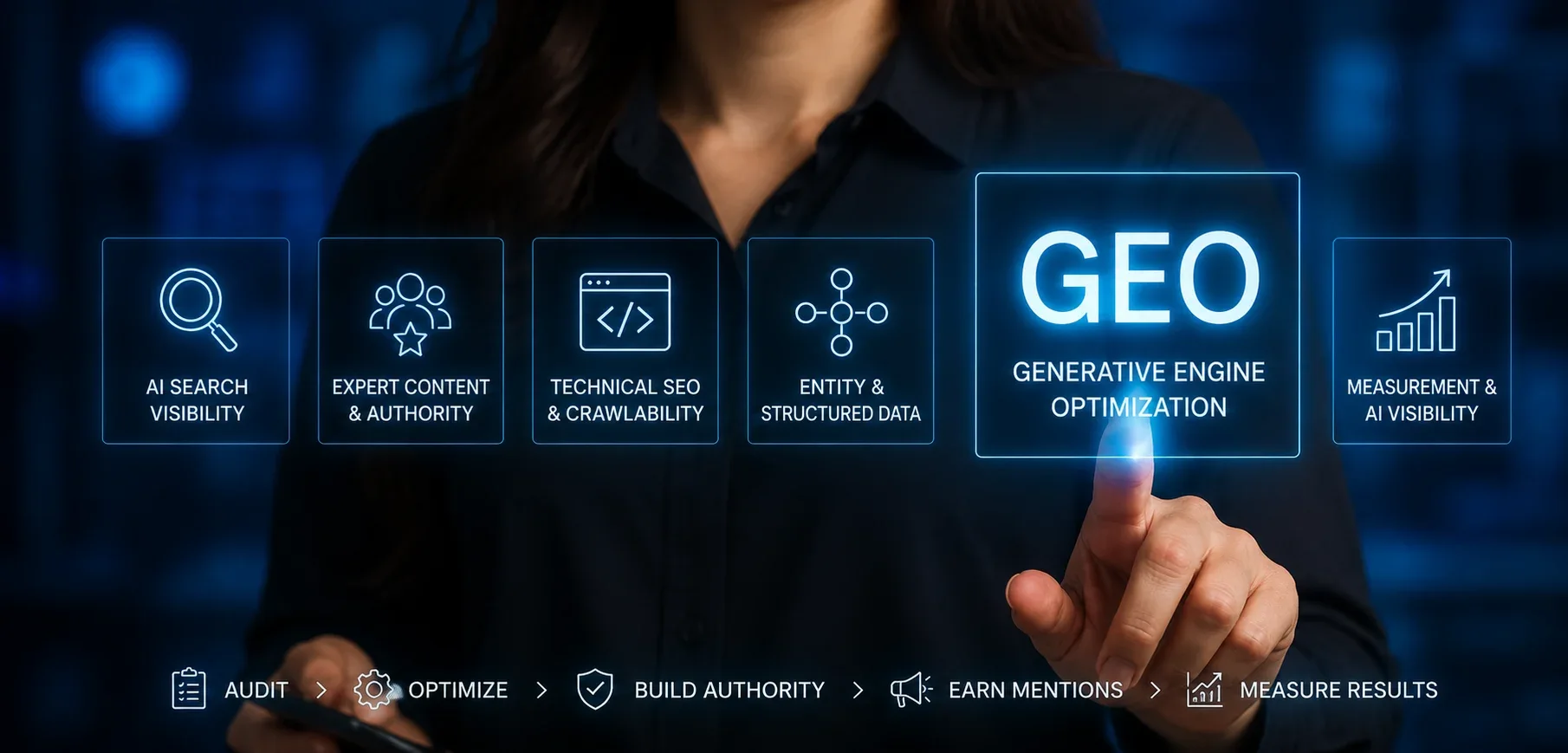
This is where Generative Engine Optimization (GEO) comes into play. GEO focuses on making your brand, products, and content easier for AI-powered search systems to understand, evaluate, and potentially reference when generating answers.
In this guide, we’ll explore how e-commerce businesses can prepare their product pages and content for the growing world of AI search.
What Is GEO for Ecommerce?
Generative engine optimization is the process of improving digital content so that AI-powered search and answer engines can better understand and use it when responding to user queries.
Traditional SEO focuses heavily on ranking webpages in search engine results. GEO takes a broader approach by making your information clear, trustworthy, structured, and useful enough to be considered within AI-generated answers.
For e-commerce brands, this means optimizing more than just product titles and keywords. Your website should clearly communicate:
- What your product does
- Who the product is designed for
- Why customers should consider it
- How it compares with alternatives
- What makes your brand trustworthy
- Important specifications, features, and use cases
Why GEO Matters for Ecommerce Brands
Consumers increasingly use conversational interfaces to research products. Instead of searching for ten different websites, they may ask an AI assistant to summarize their options.
This changes the customer journey. A potential customer might go from:
Question → AI-generated recommendations → Brand discovery → Product page → Purchase
That means ecommerce brands need to think beyond traditional rankings. Being visible inside AI-generated discovery experiences can become another part of a strong digital marketing strategy.
However, there is no guaranteed formula for making an AI system mention a particular product. The goal of GEO is to build a website with information that is easy for search systems and AI systems to interpret while also being genuinely useful to customers.
1. Create Detailed Product Pages
A product page should answer the questions a real customer would ask before making a purchase.
Instead of relying on short descriptions such as “Premium cotton T-shirt,” provide useful information about the product's materials, fit, features, intended use, sizing, care instructions, and benefits.
A stronger product page might answer questions such as:
- Who is this product best suited for?
- What problem does it solve?
- What materials or components are used?
- How should it be used?
- What makes it different from competing products?
- What questions do customers commonly ask?
The more clearly your product information is presented, the easier it becomes for users and search systems to understand your offering.
2. Build Content Around Product-Related Questions
AI search is conversational, so ecommerce brands should create content around the questions customers actually ask.
For example, a skincare brand could create content around:
- How to choose a moisturizer for dry skin
- What ingredients should you look for in a daily moisturizer?
- How often should moisturizer be applied?
- What is the difference between gel and cream moisturizers?
This type of content creates additional context around your products instead of simply repeating commercial keywords. It can also help establish your website as a useful source of information within your niche.
3. Strengthen Your Traditional SEO Foundation
GEO does not mean abandoning SEO. Your technical SEO, content quality, internal linking, crawlability, and website structure still matter.A technically strong website gives search engines a better understanding of your content and creates a stronger foundation for broader search visibility.
If your ecommerce website has weak technical foundations, unclear content, or poor information architecture, it becomes harder to build sustainable organic visibility.
Businesses looking to strengthen this foundation can explore The Night Marketer's SEO Services for a broader search optimization strategy.
4. Use Structured Product Information
E-commerce websites contain a large amount of structured information, including product names, prices, availability, ratings, brands, categories, and specifications.
Make this information consistent across your website.
Where appropriate, implement relevant structured data such as Product, Offer, Review, Organization, and Breadcrumb schema. Structured information can help search engines better interpret the entities and relationships on your website.
It is important to remember that structured data does not guarantee that your content will appear in an AI-generated answer. It simply helps provide clearer machine-readable information about your pages.
5. Build Brand Authority Beyond Your Website
AI systems do not necessarily evaluate a brand based only on its own website. Your brand may also be discussed across industry publications, reviews, directories, social platforms, comparison websites, and other relevant sources. This makes digital authority increasingly important.
For ecommerce brands, focus on building genuine mentions and relationships within your industry rather than attempting to generate large volumes of low-quality links or mentions.
6. Add Real Customer Reviews and Experiences
Customer feedback provides valuable information about how real people experience your products. Encourage genuine customers to leave detailed reviews that explain what they purchased, how they used it, and what they liked about it. For example, a review saying “Great product” provides very little context.
A detailed review explaining how the product was used and what specific problem it solved provides much more useful information. Never create fake reviews or misleading testimonials. Authenticity is far more valuable for long-term brand growth.
7. Create Comparison and “Best For” Content
Many product discovery searches are comparative.
Users may ask:
- Which product is best for beginners?
- What is better for small businesses?
- Which option is best for a specific budget?
- What is the difference between Product A and Product B?
Creating helpful comparison content can address these decision-making searches. The key is to remain objective and useful. Don't turn every comparison into an advertisement for your own product.
8. Make Your Ecommerce Website Easy to Understand
GEO is not only about content. Website structure matters too. Your categories, products, collections, navigation, headings, URLs, and internal links should create a logical relationship between different parts of your website. For Shopify brands, this becomes especially important as stores grow and accumulate hundreds or thousands of products.
A well-structured ecommerce website can make it easier for both customers and search systems to understand how products relate to categories, collections, and informational content.
If your store needs improvements in structure, user experience, or scalability, The Night Marketer's Shopify Web Design & Development services can help create a stronger foundation for ecommerce growth.
9. Write for People, Not Just Algorithms
One of the biggest mistakes brands can make with GEO is producing content purely for AI systems. Instead, write content that genuinely helps customers. Use clear language, provide useful examples, explain technical concepts where necessary, and answer real questions.
AI search optimization should be a result of creating high-quality information—not replacing good content strategy with keyword stuffing.
10. Keep Product Information Fresh
Ecommerce information changes frequently. Products are updated, prices change, stock levels fluctuate, new versions are launched, and customer preferences evolve. Regularly review important product and informational pages to ensure that the information remains accurate.
Outdated specifications or conflicting information across different pages can create confusion for customers and search systems.
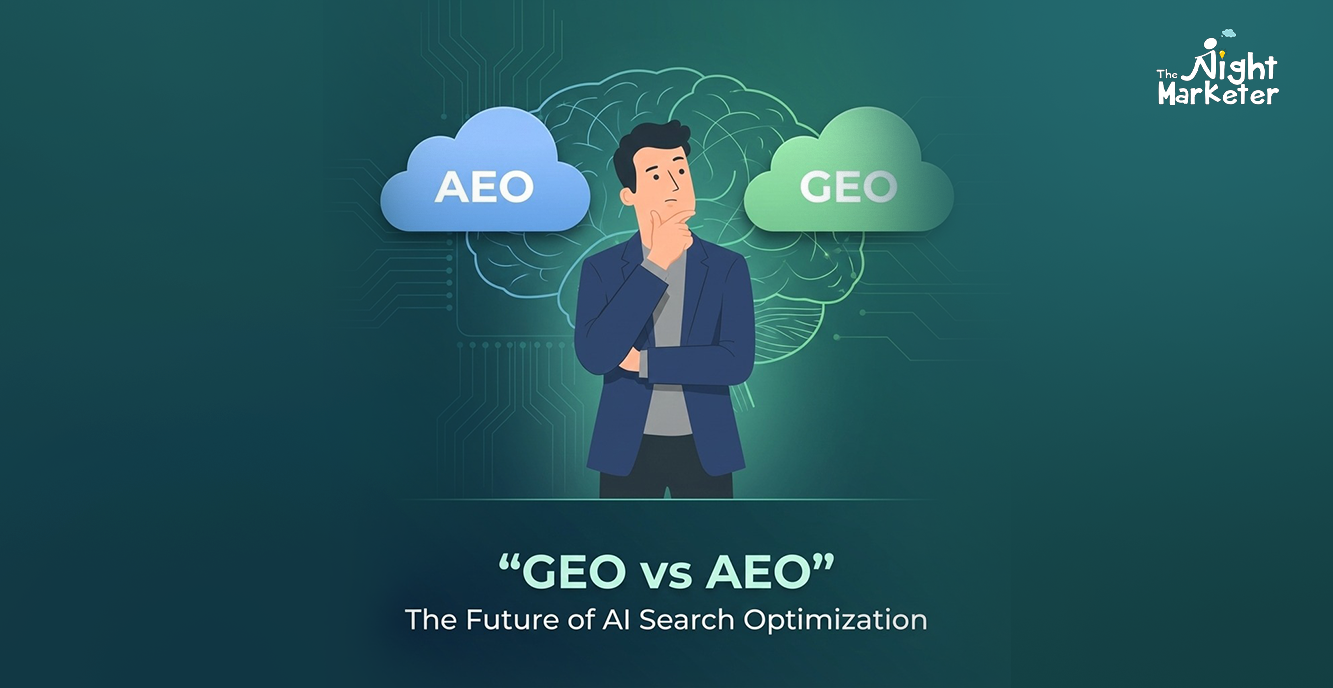
GEO vs SEO: What's the Difference?
| SEO | GEO |
|---|---|
| Focuses on search engine visibility | Focuses on visibility in generative search experiences |
| Targets keywords and search queries | Targets conversational questions and information needs |
| Emphasizes rankings and organic traffic | Emphasizes brand/product inclusion in AI-generated answers |
| Optimizes webpages for search engines | Optimizes information for AI understanding and retrieval |
These strategies shouldn't be treated as competitors. For most ecommerce businesses, the strongest approach is to build a solid SEO foundation and then expand content and brand strategy for emerging AI search experiences.
GEO Checklist for Ecommerce Websites
- Audit your product descriptions
- Create detailed product information
- Answer common customer questions
- Publish useful comparison content
- Implement relevant structured data
- Improve internal linking
- Strengthen technical SEO
- Build genuine brand mentions
- Collect authentic customer reviews
- Keep product information updated
- Improve website UX and navigation
- Monitor how your brand appears across AI search experiences
Final Thoughts
AI-powered search is changing how people discover information, brands, and products. E-commerce businesses that continue to rely exclusively on traditional keyword rankings may miss opportunities as search becomes more conversational and answer-driven.
GEO provides a framework for preparing your e-commerce content for this shift. The goal isn't to find a shortcut that forces ChatGPT, Gemini, or another AI system to mention your product. Instead, build a website with accurate product information, useful content, strong technical foundations, clear structure, and genuine brand authority.
When your content is valuable to customers and easy for modern search systems to understand, your brand is better positioned for the changing search landscape.
Frequently asked questions
Yes. Shopify stores can apply GEO principles through better product content, structured information, internal linking, educational content, technical optimization, and stronger overall website architecture.
GEO, or Generative Engine Optimization, is the process of improving a brand's content and digital presence so it can be better understood and potentially referenced by AI-powered search and answer engines.
No. There is no guaranteed method for making an AI system recommend a particular product. GEO focuses on improving the quality, clarity, authority, and accessibility of your information.
No. SEO remains an important part of ecommerce visibility. GEO should be viewed as an additional strategy for adapting to AI-driven search experiences.
Start by improving product information, answering customer questions, strengthening technical SEO, creating useful supporting content, implementing appropriate structured data, and building genuine brand authority.