In short
- Core Web Vitals continue to support better user experience, stronger engagement, and improved SEO performance in 2026.
- Optimizing LCP, INP, and CLS helps reduce bounce rates while increasing conversions across both ecommerce and service websites.
- Fast-loading, responsive websites are more likely to retain visitors and perform better in AI-powered search experiences.
- Regular performance monitoring using PageSpeed Insights and Google Search Console helps identify issues before they impact rankings.
- Technical optimization works best when combined with high-quality content, strong internal linking, and a user-first website strategy.
Imagine clicking on an online store, only to wait several seconds for the page to load. Before you even see the product, you've already lost patience and closed the tab. This is exactly why Core Web Vitals continue to matter in 2026.
While AI-powered search, personalized experiences, and advanced SEO strategies are reshaping digital marketing, website performance remains one of the strongest foundations for both user experience and business growth. Google wants to rank websites that provide fast, stable, and responsive experiences—not just because they perform better technically, but because users genuinely prefer them.
The question many businesses ask is: Do Core Web Vitals still affect rankings in 2026? The short answer is yes—but perhaps not in the way most people think. Today, Core Web Vitals are less about chasing Google's algorithm and more about improving user engagement, increasing conversions, and reducing bounce rates.
What Are Core Web Vitals?
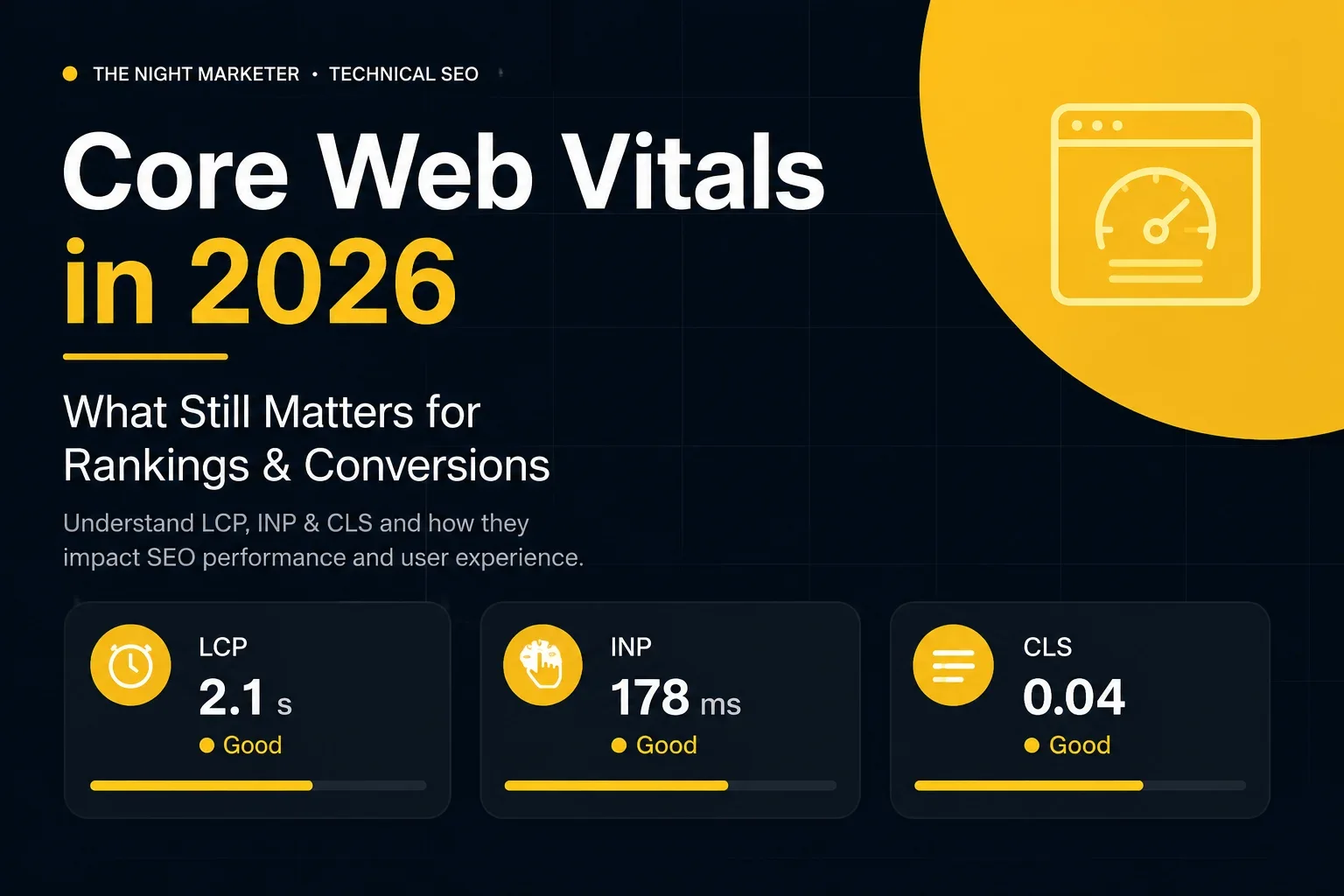
Core Web Vitals are Google's set of user experience metrics that measure how quickly, smoothly, and visually stable your website performs. Rather than focusing on dozens of technical metrics, Google highlights three key signals that directly impact real users.
- Largest Contentful Paint (LCP): Measures how quickly the main content becomes visible.
- Interaction to Next Paint (INP): Measures how responsive your website feels when users interact with it.
- Cumulative Layout Shift (CLS): Measures visual stability by checking whether page elements unexpectedly move.
These metrics are collected from real user experiences, making them far more valuable than laboratory testing alone.
Do Core Web Vitals Still Impact SEO in 2026?
Yes—but with an important clarification.
Core Web Vitals are no longer viewed as a standalone ranking factor capable of pushing poor content to the top of Google. Instead, they work alongside other important signals like content quality, search intent, expertise, authority, and user satisfaction.
If two websites publish equally valuable content, the faster and smoother experience often has the advantage. More importantly, better website performance improves engagement metrics that indirectly support SEO success.
In other words, Core Web Vitals don't replace great content—they amplify it.
The Three Metrics That Matter Most
1. Largest Contentful Paint (LCP)
LCP measures how long it takes for the largest visible element—usually a hero image, heading, or featured content—to appear.
A good LCP score should be under 2.5 seconds.
Common causes of slow LCP include:
- Oversized hero images
- Slow server response times
- Heavy JavaScript files
- Poor hosting infrastructure
- Render-blocking CSS
Optimizing images, improving hosting, enabling caching, and reducing unnecessary scripts significantly improve loading speed.
2. Interaction to Next Paint (INP)
INP officially replaced First Input Delay (FID) and has become one of the most important performance metrics in 2026.
Rather than measuring only the first interaction, INP evaluates how quickly your website responds throughout the user's visit.
A good INP score should remain below 200 milliseconds.
Slow interactions usually result from:
- Heavy JavaScript execution
- Third-party tracking scripts
- Large Shopify apps
- Complex page builders
- Inefficient event handlers
For ecommerce stores, improving INP creates a noticeably smoother shopping experience.
3. Cumulative Layout Shift (CLS)
Have you ever tried clicking a button only for the page to shift at the last second?
That's exactly what CLS measures.A good CLS score should stay below 0.1.Unexpected layout shifts often happen because:
- Images have no predefined dimensions.
- Ads load after page content.
- Fonts swap unexpectedly.
- Dynamic elements appear without reserved space.
Reducing layout shifts creates a far more professional user experience.
Why Core Web Vitals Matter More for Conversions Than Rankings
Many businesses obsess over rankings while ignoring what happens after visitors arrive.
A faster website helps users browse products more comfortably, complete forms with fewer interruptions, and finish purchases without frustration.
Improved performance often leads to:
- Lower bounce rates
- Higher average session duration
- More completed purchases
- Better lead generation
- Higher customer satisfaction
- Improved mobile usability
For Shopify stores and service-based businesses alike, performance optimization directly influences revenue—not just visibility.
Common Performance Mistakes Businesses Still Make
Even in 2026, many websites continue making avoidable mistakes that hurt both user experience and conversions.
- Uploading uncompressed images
- Installing too many plugins or Shopify apps
- Using multiple tracking scripts
- Ignoring mobile performance
- Failing to lazy-load media
- Not optimizing fonts
- Using slow third-party widgets
- Skipping browser caching
Fixing just a few of these issues often produces measurable improvements without redesigning the website.
How to Improve Core Web Vitals in 2026
The good news is that improving Core Web Vitals doesn't always require rebuilding your website.
- Compress and properly size images.
- Use modern image formats like WebP or AVIF.
- Minimize unused JavaScript.
- Reduce unnecessary third-party scripts.
- Choose reliable, high-performance hosting.
- Enable browser caching.
- Implement lazy loading for images and videos.
- Reserve space for images and dynamic elements.
- Optimize Shopify themes and remove unused apps.
- Regularly monitor performance using PageSpeed Insights and Search Console.Consistent monitoring helps identify new performance issues before they impact rankings or user experience.
Core Web Vitals and AI Search
With Google AI Overviews and AI-powered search experiences becoming increasingly common, website quality matters more than ever.
While AI systems primarily evaluate content relevance and authority, users who click through still expect websites to load quickly and function smoothly. Poor performance can reduce engagement, increase bounce rates, and limit the overall effectiveness of your SEO efforts.
Fast websites complement strong content, creating a better experience for both search engines and users.
Final Thoughts
Core Web Vitals remain one of the most practical investments businesses can make in 2026. They may not guarantee higher rankings on their own, but they strengthen every part of your digital marketing strategy—from SEO and user experience to lead generation and ecommerce conversions.
If your website loads quickly, responds instantly, and provides a stable browsing experience, visitors are more likely to stay, engage, and convert. That's why performance optimization continues to be a competitive advantage in today's AI-driven search landscape.
Need Help Optimizing Your Website Performance?
At The Night Marketer, we help businesses improve Core Web Vitals, optimize Shopify stores, enhance technical SEO, and build high-converting websites that deliver measurable results. Whether you're struggling with slow loading times, poor mobile performance, or declining conversions, our experts can help transform your website into a faster, more profitable digital experience.
Get in touch with The Night Marketer today and let us optimize your website for better rankings, better performance, and better conversions.
Frequently asked questions
While Core Web Vitals are not the only ranking factor, they remain an important part of Google's Page Experience signals. Websites that load quickly, respond smoothly, and provide a stable browsing experience are more likely to keep users engaged, which can positively support SEO performance.
The three Core Web Vitals are Largest Contentful Paint (LCP), Interaction to Next Paint (INP), and Cumulative Layout Shift (CLS). These metrics measure loading speed, responsiveness, and visual stability to evaluate the overall user experience of a webpage.
Google recommends maintaining an LCP of 2.5 seconds or less, an INP below 200 milliseconds, and a CLS score below 0.1. Meeting these benchmarks helps create a faster and more user-friendly website experience.
You can improve Core Web Vitals by optimizing images, minimizing unused JavaScript and CSS, enabling browser caching, using a fast hosting provider, implementing lazy loading, and reducing third-party scripts. Regular performance monitoring with Google PageSpeed Insights and Search Console also helps identify optimization opportunities.