In short
- Set the wait around the product’s repeat-purchase cycle.
- Recheck orders and suppression before each message.
- Test the offer and skipped-recipient reasons with controlled profiles.
- Measure repeat orders and margin after discounts.
A customer who bought skincare six weeks ago may be due to reorder. A customer who bought a coffee machine at the same time probably needs different follow-up. Set the winback delay around the buyer’s expected next purchase and verify that newer orders can stop a queued message.
Choose the audience and the delay
Start with customers who have placed an order and are eligible for marketing. Compare the time between completed orders for similar products and customer groups. If history is sparse, use expected product use to pick a provisional delay and document how you will review it.
Check what the order event actually represents. Paid, completed and fulfilled can describe different points in the order journey. Use a consistent event and check how cancellations and refunds should affect eligibility. Exclude products that rarely repeat or give their buyers a separate reason to hear from you.
Make repeat purchases stop the sequence
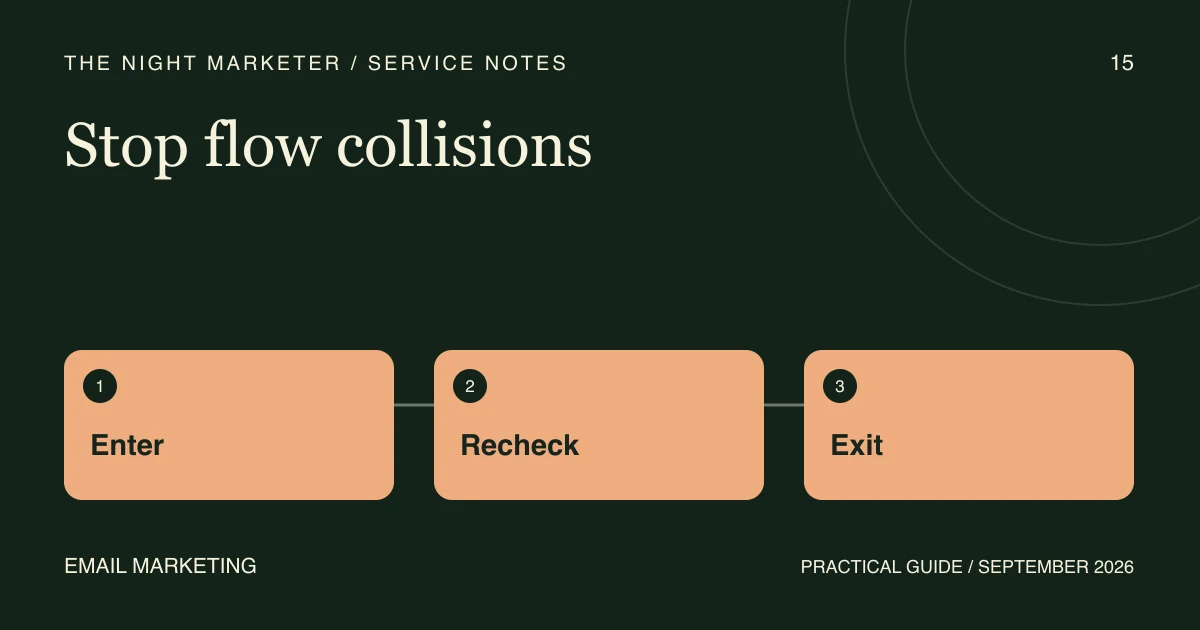
Check eligibility again before every send. A customer may reorder, unsubscribe or start a subscription after entering the flow. Decide how you will handle active subscribers and unresolved support cases. Record which rule stopped the email so the team can verify its behaviour.
Klaviyo’s winback flow guide uses a purchase event to start the sequence and a profile filter to skip people who order again. If purchases reach your account through multiple integrations, verify each relevant event. Check timestamps and delayed events in profiles you control before relying on an order to stop a send.
Test the offer and the exit cases
Start with a reason to return, such as an appropriate refill, a product update or a useful accessory. If you add an incentive, verify eligible products, expiry and checkout behaviour. Review fulfilment costs and margin before making discounts the default.
Illustrative test. A customer enters after buying a refill and qualifies for a reminder. They reorder through another connected storefront before the queued send. The expected result is a recorded purchase and a skipped winback message. Test the same timeline with no new purchase, an unsubscribe and an expired offer.
- Still eligible: The intended reminder is queued with the correct destination and offer.
- Purchase after entry: The order appears on the profile and remaining winback messages are skipped.
- Suppressed or unsubscribed: Pending promotional messages are skipped.
- Broken link or expired code: Hold the message until the destination and terms match.
Decide what counts as a useful result
Release to a defined audience after the team agrees on entry, exit and re-entry rules. Compare completed repeat orders, net revenue after discounts and any rise in unsubscribes or complaints. If you have enough volume, compare against a holdout using the same eligibility and time window. Keep an owner for the first review.
If other flows can reach the same customer, use the email flow collision audit to agree on message priority. For help defining the events, delay and tests for your store, discuss your winback flow with our email automation team.
Frequently asked questions
Set a starting delay slightly beyond the expected repeat-purchase window for the group. Compare order intervals for similar products and customers. Where you have little history, document your assumption and revisit it after a pilot.
Use the relevant purchase event to exclude profiles that ordered after entering. Verify timing for every connected order source you depend on, and check the skipped-recipient record on controlled profiles.
Check their current subscription status and what the message is asking them to do. An active subscriber may still be receiving products on schedule. Give active, paused and cancelled subscribers separate eligibility rules when the offer or timing differs.
No. Start with a relevant reminder, refill or other reason to return. Test an incentive where eligibility and margins support it. Compare completed repeat orders and contribution after discounts.