In short
- Build your content workflow around search intent before using AI tools.
- Combine AI-generated drafts with human expertise to create original, high-quality content.
- Optimize articles for both Google Search and AI-powered search experiences using structured, user-focused content.
- Regularly update and improve existing content to maintain rankings and visibility.
Artificial Intelligence has completely transformed the way businesses create content. What once took an entire day can now be done in just a few hours using tools like ChatGPT, Claude, or Gemini. While this has made content production faster, it has also increased competition. Thousands of AI-generated blogs are published every day, but only a handful actually rank on Google or appear in AI-powered search platforms like Google AI Mode, ChatGPT, Perplexity, and Gemini.
The reason is simple—AI can generate content, but it cannot replace strategy. Search engines are no longer rewarding content just because it contains keywords. They prioritize content that answers user questions, demonstrates expertise, and provides genuine value. If your workflow begins and ends with copying a prompt into an AI tool, you're likely creating the same content as everyone else.
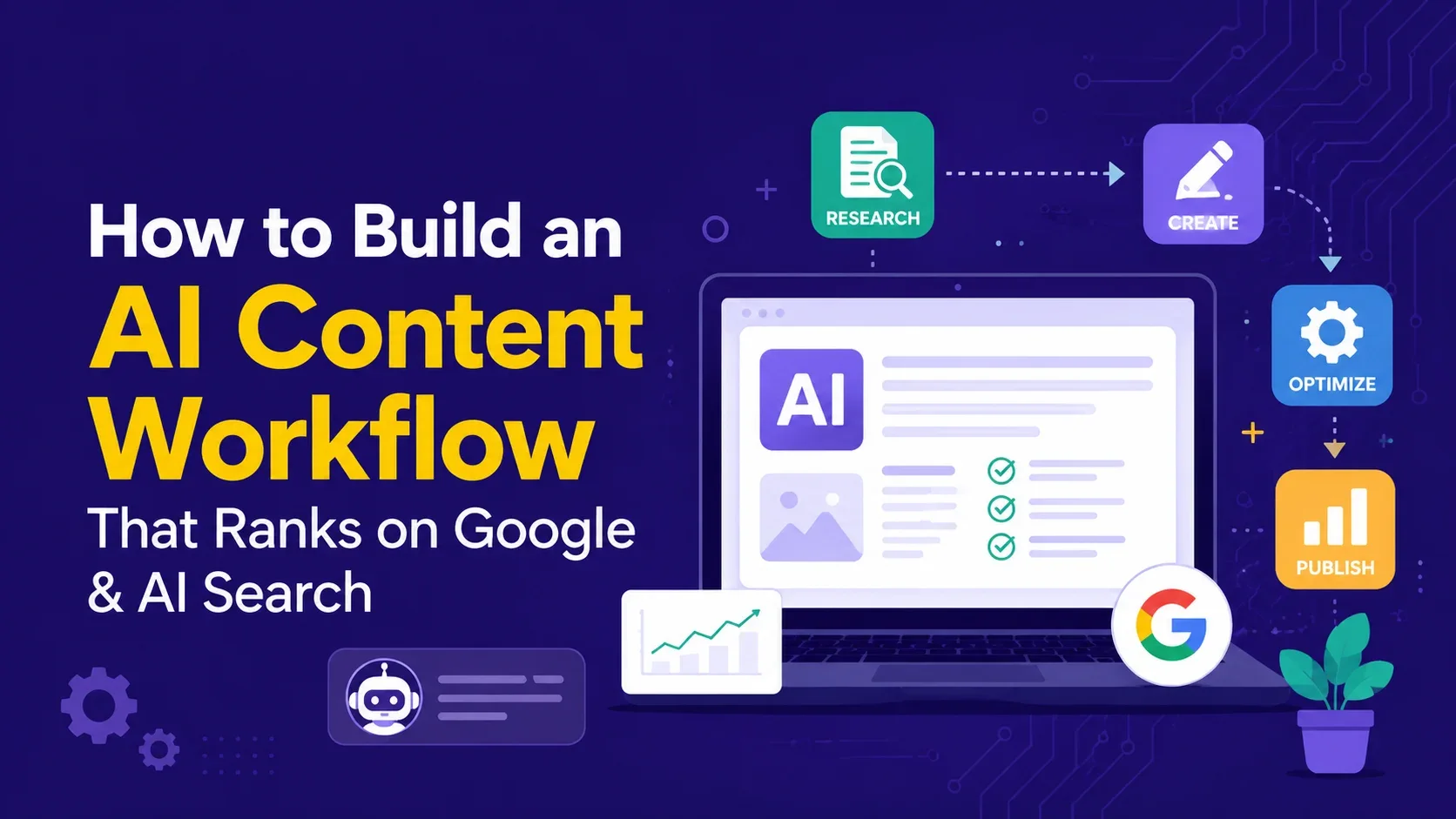
The good news is that AI can become one of your biggest advantages when it's used as part of a structured content workflow. Let's explore how you can build a process that helps your content rank on both Google and AI search platforms.
Start With Search Intent, Not AI
One of the biggest mistakes marketers make is opening ChatGPT before understanding what users are actually searching for. Every successful blog starts with identifying search intent.
Ask yourself why someone is searching for your target keyword. Are they looking to learn something, compare solutions, or solve a specific problem? Once you understand the intent behind the search, AI can help you create content that directly addresses those needs instead of producing generic information.
Before writing, spend some time researching Google's search results, "People Also Ask" questions, competitor articles, and industry discussions. This research gives your AI tool the context it needs to generate better content.
Create a Detailed Content Brief
A strong content brief acts as the foundation of your article. Instead of asking AI to "write a blog about AI content workflows," provide clear instructions that explain exactly what you want to achieve.
Your content brief should include:
- The primary keyword and supporting keywords.
- The target audience and their search intent.
- Important subtopics, examples, and FAQs to cover.
- The desired tone and structure of the article.
When AI receives detailed instructions, the quality of the output improves significantly. It also reduces the amount of editing required later.
Use AI to Build the First Draft
Once your research is complete, AI becomes an excellent writing assistant. It can help generate outlines, organize ideas, improve readability, and speed up the drafting process.
However, it's important to remember that the first draft should never be your final version. AI often repeats ideas, misses important details, or includes outdated information. Think of the draft as a starting point rather than a finished article.
The goal isn't to publish AI-generated content—it's to create a strong foundation that can be improved with human expertise.
Add Human Experience and Original Value
This is where your content starts standing out from thousands of AI-generated articles online.
Readers trust content that includes real experiences, practical examples, and unique insights. Search engines also reward content that demonstrates expertise instead of simply summarizing information already available on the internet.
Some effective ways to improve your article include:
- Adding examples from real projects or client experiences.
- Including screenshots, case studies, or original data.
- Sharing practical tips that you've personally tested.
These additions make your content more authentic while increasing its chances of earning higher rankings.
Optimize for Google and AI Search
Modern SEO is no longer about repeating the same keyword multiple times. Search engines now focus on understanding the overall topic and how well your content answers user questions.
Organize your article with clear headings, short paragraphs, and natural language. Instead of forcing keywords into every section, focus on covering the topic completely. Related concepts, entities, and frequently asked questions help search engines better understand your content.
AI-powered search platforms also prefer content that is easy to summarize. Well-structured articles with logical flow and helpful explanations are far more likely to appear in AI-generated answers.
Build Topical Authority Instead of Writing Random Blogs
Publishing one great article isn't enough anymore. Search engines prefer websites that consistently cover an entire topic instead of producing isolated pieces of content.
For example, if your main topic is AI content marketing, create supporting articles around related subjects like AI SEO, prompt engineering, AI search optimization, content audits, and AI tools. Link these articles together so readers and search engines can easily navigate between them.
A strong content cluster helps establish your website as an authority within your niche, making it easier for new articles to rank.
Edit Every Draft Carefully
Editing is one of the most overlooked steps in an AI content workflow, yet it's often what determines whether a blog succeeds or fails.
After generating your draft, read every section carefully. Remove repetitive phrases, improve awkward transitions, verify facts, and simplify complex explanations. Make sure every paragraph contributes something valuable instead of simply increasing the word count.
During the editing process, focus on:
- Improving readability and sentence flow.
- Fact-checking statistics and examples.
- Removing repetitive or robotic language.
- Ensuring the content matches your brand voice.
A well-edited article not only performs better in search results but also creates a better experience for your readers.
Track Performance and Keep Updating
Publishing your article is only the beginning of the content lifecycle. The best-performing websites continuously monitor and improve their content over time.
Use tools like Google Search Console and Google Analytics to understand how your content is performing. Look for opportunities to improve click-through rates, update outdated information, and expand sections that users find valuable.
Keep an eye on:
- Organic traffic and keyword rankings.
- User engagement and average time on page.
- Search queries generating impressions.
- Pages that need updates or additional information.
Refreshing existing content is often more effective than publishing a brand-new article every week.
Final Thoughts
AI has made content creation faster than ever, but it hasn't changed what makes content valuable. Businesses that rely entirely on AI-generated articles often struggle to rank because they miss the elements that search engines and readers truly care about—original insights, expertise, and genuine usefulness.
Creating AI-generated content is easy, but creating content that consistently ranks on Google and AI search platforms requires the right strategy. At The Night Marketer, we help businesses combine AI, SEO, and content marketing to build high-quality content that drives long-term organic growth. Whether you're looking to scale your content production, improve search visibility, or optimize your website for AI search, our team is here to help you stay ahead of the competition.