In short
- Clicks do not always mean qualified traffic or leads.
- Poor targeting and landing pages can waste Google Ads traffic.
- Strong offers, CTAs, trust signals, and simple forms improve conversions.
- Accurate conversion tracking is essential for optimizing campaigns.
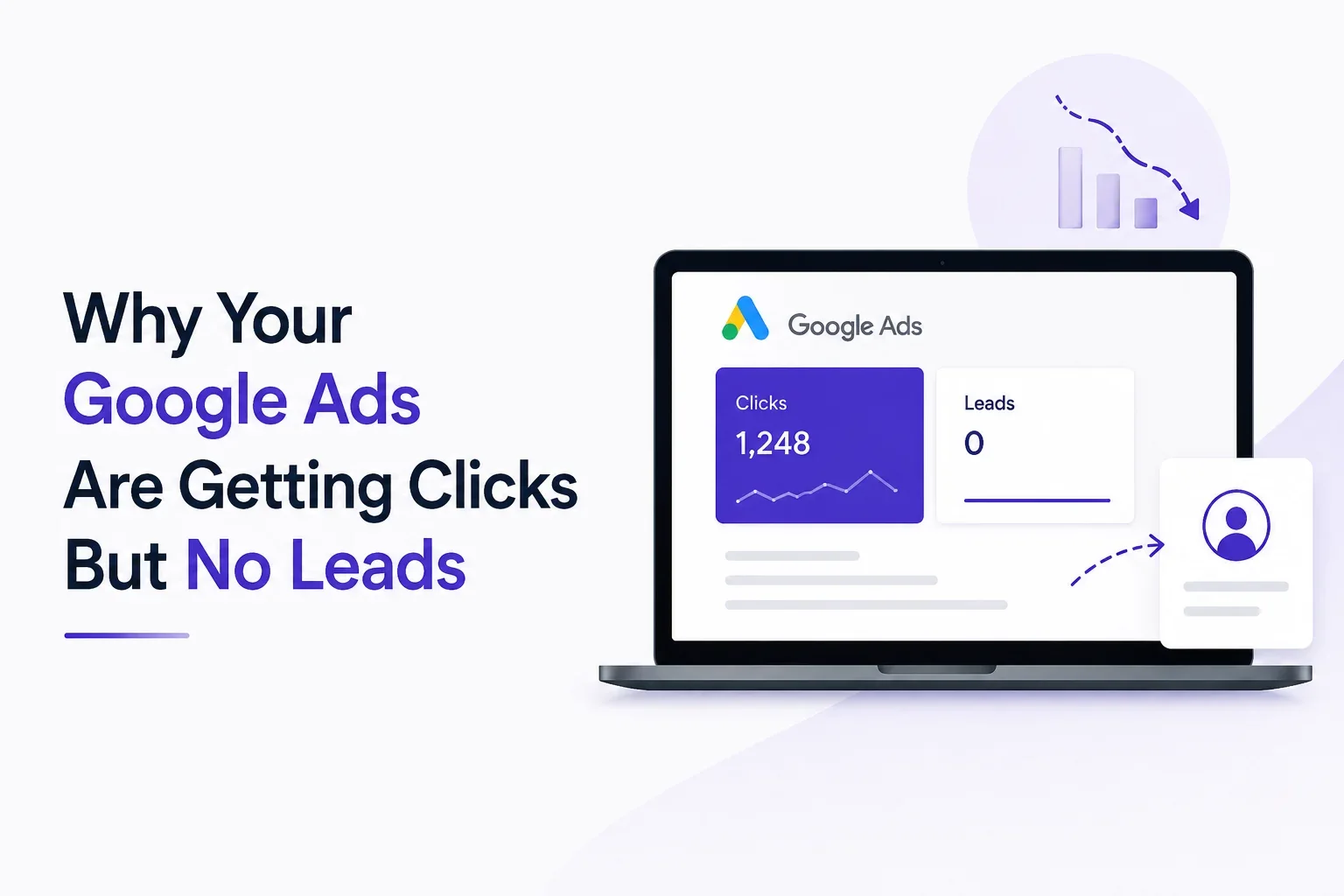
Google Ads can bring a steady stream of visitors to your website, but clicks alone do not guarantee business growth. If your campaigns are generating clicks but very few or no leads, the problem may not be your traffic. It could be what happens after someone clicks your ad.
A successful Google Ads campaign needs more than attractive ad copy and relevant keywords. Your targeting, landing page, offer, user experience, tracking, and conversion process all need to work together.
Here are the most common reasons your Google Ads are getting clicks but no leads—and what you can do about them.
1. Your Ads Are Targeting the Wrong Audience
One of the biggest reasons for low conversions is irrelevant traffic.
You may be targeting keywords that generate plenty of searches but do not represent strong buying intent. For example, someone searching for “digital marketing tips” may only want information, while someone searching for “digital marketing agency for ecommerce” is much closer to hiring an agency.
Broad or loosely related keywords can increase clicks while reducing lead quality.
What to do
Review your search terms regularly and identify irrelevant queries. Add negative keywords to prevent your ads from appearing for searches that are unlikely to generate business.
Focus more heavily on commercial and high-intent keywords such as:
- Hire digital marketing agency
- Shopify development company
- SEO agency for small business
- Google Ads management services
The goal is not simply to get more clicks. It is to get clicks from people who are actually likely to become customers.
2. Your Ad Promises Something Your Landing Page Does Not
Imagine clicking an ad that says:
“Get a Free Website Audit Today.”
- But after clicking, you land on a generic homepage with no mention of the free audit.
- The visitor now has to search for the offer themselves. Many users will simply leave.
- Your ad and landing page should feel like two parts of the same message.
- If your ad promotes a specific service, offer, discount, consultation, or benefit, that same message should immediately appear on the landing page.
A simple rule:
Ad promise → Landing page message → Conversion action
The closer these three elements are aligned, the easier it is for visitors to take the next step.
3. Your Landing Page Is Not Designed for Conversions
You can have excellent Google Ads and still lose potential customers because of a poor landing page.
Common landing page problems include:
- Too much information
- Weak or unclear headlines
- No obvious call-to-action
- Slow loading speed
- Poor mobile experience
- Too many navigation options
- Generic stock images
- Long or complicated forms
- Lack of trust signals
Your landing page should answer three questions quickly:
What are you offering?
Why should I choose you?
What should I do next?
If visitors cannot understand the value within a few seconds, they may leave before ever reaching your form or contact button.
4. Your Call-to-Action Is Too Weak
“Submit” is technically a call-to-action, but it does not give users much motivation.
A stronger CTA communicates what happens next.
For example:
- Get My Free Audit
- Request a Free Consultation
- Get a Custom Quote
- Book My Strategy Call
- Talk to an Expert
Your CTA should also be easy to find. If users have to scroll through an entire page to discover how to contact you, you are creating unnecessary friction.
5. Your Lead Form Is Asking for Too Much
Every additional form field creates another opportunity for a visitor to abandon the process.
If you are asking for:
- Full name
- Company name
- Job title
- Phone number
- Company size
- Monthly revenue
- Website
- Budget
- Address
- Detailed requirements
you may be asking for too much information before establishing enough trust. Start with the information you genuinely need to qualify or contact the lead. For many businesses, a simple form with name, email/phone, and requirements can be enough. You can collect additional information later during the sales process.
6. Your Website Is Slow or Difficult to Use
People expect websites to load quickly, especially when they arrive from paid advertising. If your landing page takes too long to load, users may leave before seeing your offer. Mobile performance is particularly important because a significant portion of paid traffic can come from smartphones.
Check your website for:
- Slow page loading
- Large image files
- Unoptimized videos
- Layout shifts
- Poor mobile navigation
- Small buttons
- Difficult-to-use forms
Improving page speed and mobile usability can make a major difference to conversion rates.
7. Your Website Does Not Build Enough Trust
A visitor may be interested in your service but still hesitate to submit their information. Why? Because they do not trust the business yet. Your landing page should provide evidence that you can deliver what you promise.
Useful trust signals include:
- Client testimonials
- Case studies
- Reviews
- Industry certifications
- Previous client logos
- Portfolio examples
- Results and statistics
- Clear contact information
- Guarantees where appropriate
Instead of simply telling visitors that you are good, show them why they should believe you.
8. Your Offer Is Not Compelling Enough
Sometimes the problem is not the ad or the landing page.
It is the offer.
“Contact us for digital marketing services” may not be enough to convince someone to provide their details.
Compare that with:
“Get a Free 20-Minute Growth Consultation for Your Business.”
The second offer gives the visitor a clear reason to take action.
Your offer should communicate a specific benefit and reduce the perceived risk of taking the next step.
9. Your Conversion Tracking May Be Incorrect
Before changing your entire campaign, make sure your tracking is working properly. Sometimes businesses believe they are receiving no leads when their tracking setup simply is not recording conversions correctly.
Check whether you are tracking:
- Form submissions
- Phone calls
- WhatsApp clicks
- Email clicks
- Appointment bookings
- Chat interactions
- Thank-you page visits
Google Ads conversion tracking and GA4 should be reviewed regularly to ensure important actions are being recorded correctly.
Without accurate tracking, you cannot confidently determine which campaigns, keywords, ads, or landing pages are actually generating results.
10. You Are Optimizing for Clicks Instead of Conversions
A campaign can have a great click-through rate and still generate poor business results.
For example:
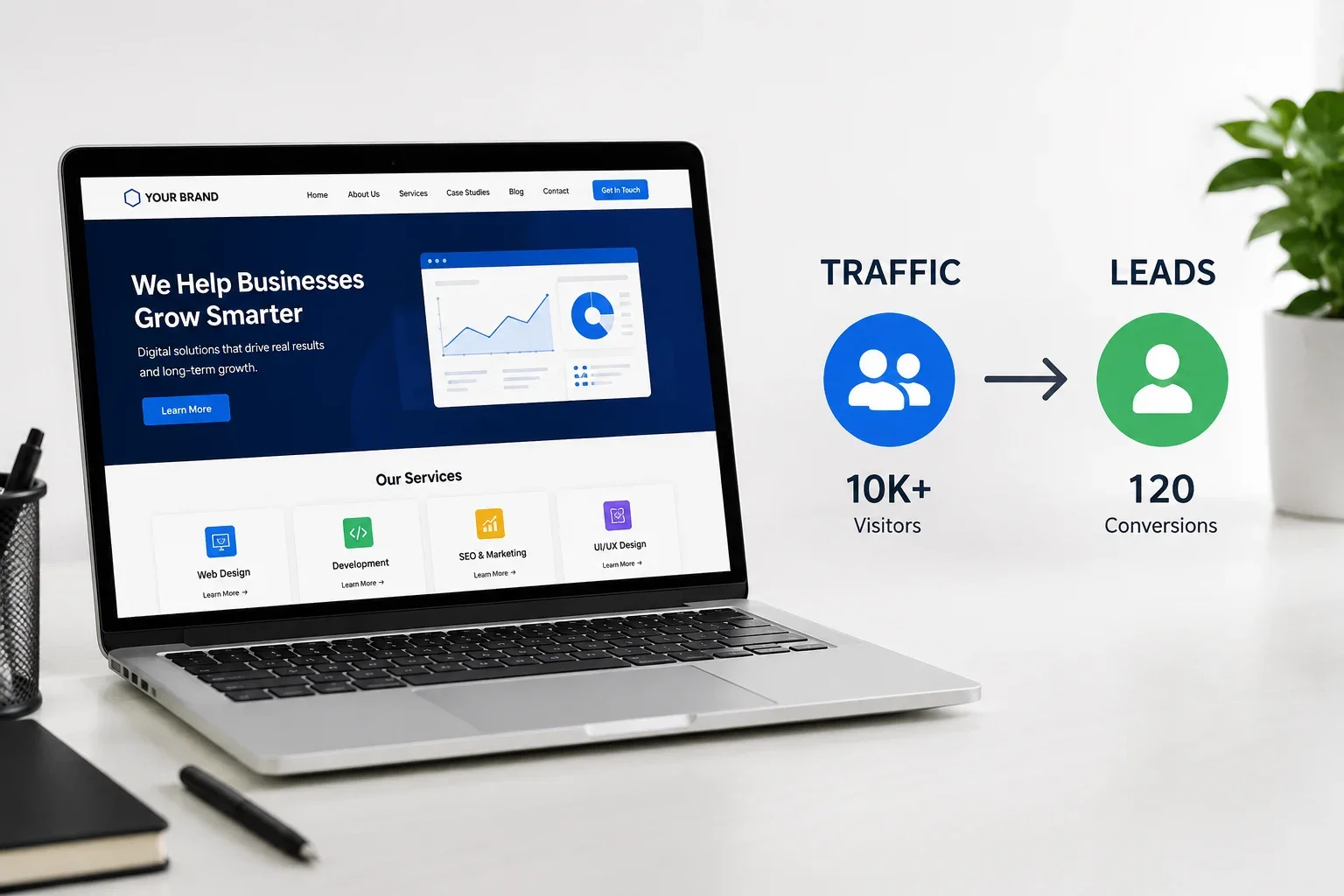
10,000 impressions → 500 clicks → 0 leads
may look impressive at the traffic level, but commercially it is a problem.
Instead, evaluate the entire funnel:
Impressions → Clicks → Landing Page Visits → Leads → Qualified Leads → Customers
This helps you identify exactly where users are dropping off.
If you are getting clicks but no leads, focus less on increasing traffic and more on improving the transition from visitor to lead.
How to Fix a Google Ads Campaign With Clicks but No Leads
If your campaign is already receiving traffic, do not immediately increase your budget.
Start with an audit.
Step 1: Check your search terms
Find out what people are actually searching before clicking your ads.
Step 2: Review keyword intent
Separate informational searches from commercial and transactional searches.
Step 3: Improve ad-to-page relevance
Make sure your landing page directly matches the promise made in the ad.
Step 4: Simplify the conversion process
Reduce unnecessary form fields and make your CTA highly visible.
Step 5: Improve trust
Add reviews, testimonials, case studies, results, and other relevant credibility signals.
Step 6: Test different landing pages
Create variations with different headlines, offers, layouts, and CTAs.
Step 7: Verify conversion tracking
Make sure every important lead action is being recorded accurately.
Step 8: Optimize based on leads, not clicks
A keyword producing 20 clicks and zero leads may be less valuable than a keyword producing five clicks and two qualified leads.
Final Thoughts
Getting clicks from Google Ads is only the beginning. If those clicks are not turning into leads, the answer is usually somewhere in the journey between the search query and the conversion action.
Your targeting needs to attract the right audience. Your ad needs to set the right expectation. Your landing page needs to deliver on that promise. Your offer needs to create a reason to act, and your conversion process needs to make taking that action easy.
At The Night Marketer, we look beyond clicks and impressions to understand what is preventing paid traffic from becoming real business opportunities. A properly optimized Google Ads strategy focuses on qualified traffic, conversion rates, lead quality, and ultimately business growth.
Frequently asked questions
Common reasons include poor keyword targeting, weak landing pages, unclear CTAs, complicated forms, slow websites, weak offers, and incorrect conversion tracking.
There is no universal number. Lead volume depends on your industry, offer, keyword intent, competition, landing page, audience, and conversion rate.
Not necessarily. If your campaign is not converting, increasing the budget may simply generate more unqualified traffic. Identify and fix the conversion problem first.
Yes. Your landing page plays a major role in turning paid traffic into leads. It should be relevant to the ad, easy to navigate, mobile-friendly, trustworthy, and focused on one clear conversion goal.
Start by improving keyword intent and negative keyword targeting, aligning ads with landing pages, strengthening your offer, simplifying your forms, improving website speed, adding trust signals, and accurately tracking conversions.