
In short
- Choose blog topics by buying intent, starting with questions customers ask just before they purchase.
- Comparison posts, buying guides, use-case routines and problem-solution posts lead naturally to products.
- Every commercial post needs an answer-first opening, product cards at decision points and one clear call to action.
- Measure landing-page revenue, assisted conversions, product clicks and email sign-ups instead of page views.
- Refresh posts ranking in positions 5 to 15 each quarter before writing new ones.
A Shopify blog strategy drives sales when every post targets a question buyers ask close to purchase, answers it honestly, and gives the reader an obvious next step to a product or collection. That means fewer "industry news" and "10 fun facts" posts, and more comparison, how-to-choose, use-case and problem-solving content, measured by revenue and assisted conversions rather than page views.
Plenty of D2C blogs get traffic and no orders. They rank for broad informational searches from readers who will never buy, and the posts end without a single product link. Here is how to build a blog that earns its place in your marketing budget.
- Choose topics by buying intent, starting with questions asked just before purchase.
- Use post formats that naturally lead to products: comparisons, buying guides, use cases and fixes.
- Build every post with an answer-first opening, embedded products and one clear call to action.
- Measure landing-page revenue and assisted conversions in GA4, and refresh winners before writing new posts.
Why most Shopify blogs do not sell
The usual pattern looks like this: a founder or intern writes one post a week on whatever seems interesting, targeting high-volume keywords such as "benefits of green tea". The post ranks on page two, attracts students and researchers, and nobody buys. After six months, the blog is labelled "not working" and abandoned.
The problem is not blogging. It is topic selection and page design. A post about "green tea vs matcha for weight loss: which should you drink?" attracts fewer visitors, but many of them are actively deciding what to buy. If your store sells both, that post can sell.
Step 1: map topics to buying intent
Sort every potential topic into one of four intent levels. Write from the bottom of the table up.
| Intent level | What the reader wants | Example topics for a coffee brand | Priority |
|---|---|---|---|
| Ready to buy | Confirm the right product | "Best coffee beans for a French press", "Our medium vs dark roast: which to pick" | Write first |
| Comparing | Understand options | "Arabica vs robusta", "Pour-over vs cold brew at home" | Write second |
| Problem-aware | Fix something | "Why is my coffee bitter?", "How to stop cold brew tasting watery" | Write third |
| Curious | Learn generally | "History of coffee in South India" | Only for brand or PR reasons |
Where do you find these topics? Your best sources are customer-facing: support tickets, WhatsApp chats, return reasons, product reviews and the questions your sales or live-chat team answers every day. Add Search Console queries where you already get impressions, and Google's "People also ask" boxes for your category.
A useful filter: if you cannot naturally link a post to a product or collection, question whether you should write it.
Step 2: use post formats that lead to products
Comparison posts
"X vs Y" posts attract readers who have already narrowed their choice. Be fair: explain when each option suits a different buyer, even if one is not yours. Credibility is what makes readers trust your recommendation.
How-to-choose buying guides
"How to choose a mattress for back pain" or "how to pick the right SPF for Indian summers" lets you walk readers through criteria, then show which of your products fits each case. These often become some of a store's strongest organic pages.
Use-case and routine posts
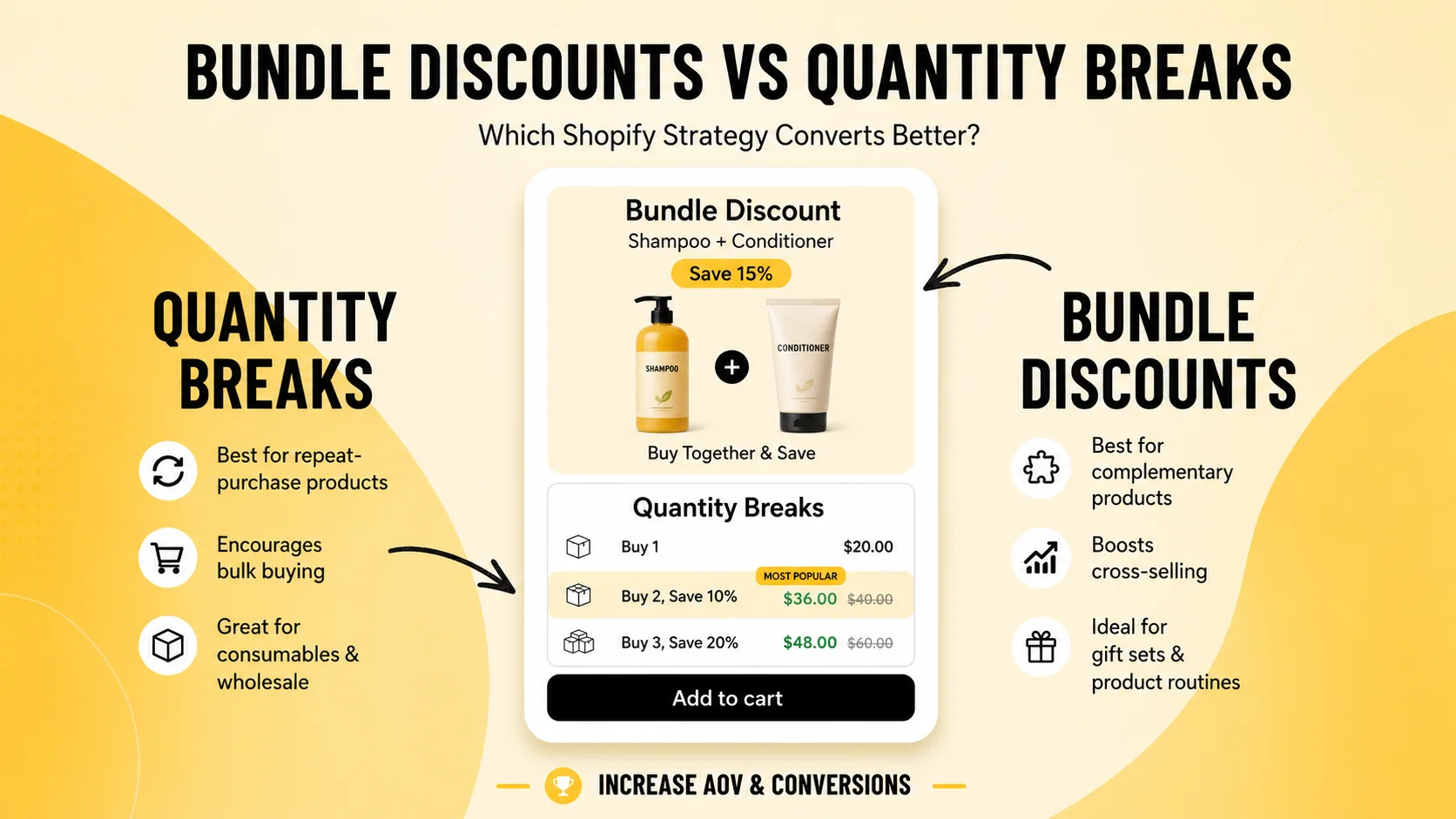
"A 5-minute morning skincare routine for oily skin" or "what to pack for a Ladakh bike trip" shows products in context. They work especially well for bundles and cross-sells; see our roundup of Shopify bundle apps if you want to sell the routine as a set.
Problem-solution posts
Readers searching "why does my kurta shrink after washing" have a problem right now. Solve it genuinely first, then mention how your product avoids it.
Seasonal and gifting guides
For Indian D2C brands, Diwali, Raksha Bandhan, wedding season and year-end gifting drive predictable searches. Publish and update these six to eight weeks before the season so they have time to be crawled and ranked. A gift guide published a week before Diwali is usually too late for organic search.
Step 3: design every post to sell
A blog post that sells has a recognisable anatomy. Use this as a template for every commercial post:
- Answer first: give the direct answer in the first two or three sentences. Readers who get what they came for trust the rest of the page.
- Short summary: three or four bullets for skimmers.
- Criteria or explanation: the substance, with your genuine expertise and specifics.
- Embedded products: product cards or linked product names at the point where the reader decides, not only at the end.
- One primary call to action: "Shop French press roasts" is better than five competing banners.
- Author and trust signals: who wrote it, why they know the subject, and when it was last updated.
On Shopify, check what your theme's article template supports. Many themes let you add product or collection blocks to blog templates through the theme editor; others need a small custom section. Either way, a styled product card with price and an Add to Cart or View button converts better than a plain text link buried in a paragraph.
Also capture readers who are not ready yet. A relevant email or WhatsApp opt-in (for example, "Get our free brewing guide") lets your retention flows do the selling later. Our beginner's guide to Klaviyo explains how to set up those flows.
Step 4: publish at a pace you can sustain
Consistency beats volume. For most D2C brands, two to four well-researched commercial posts a month is realistic and effective. A simple 90-day plan might look like this:
| Month | Focus | Output |
|---|---|---|
| 1 | Ready-to-buy and comparison posts for top 3 product lines | 4 posts |
| 2 | Buying guides and problem-solution posts | 3 posts plus refresh of 2 older posts |
| 3 | Seasonal guide for the next sales period, plus use-case posts | 3 posts plus distribution push |
Distribution matters as much as publishing. Send new posts to your email list, turn key sections into Instagram carousels or Reels scripts, and use the best posts as landing pages for low-cost awareness ads.
Step 5: measure what the blog actually earns
Page views tell you almost nothing about sales. Track these instead:
- Revenue by landing page: in GA4, look at sessions starting on blog URLs and the purchases and revenue from those sessions.
- Assisted conversions: use GA4's attribution and conversion path reports to see how often blog visits appear before a purchase that happens later through another channel.
- Click-through to products: track clicks on product cards and links within posts as events.
- Email sign-ups from posts: tag opt-in forms by post so you can see which content builds your list.
Here is a worked example of how to judge a post. Suppose a buying guide gets 1,200 sessions a month, 3% of readers click through to a product and 2.5% of those visitors buy with a ₹1,800 average order value. That is roughly 36 product visits and about one direct order a month, around ₹1,600 in revenue. Weak on its own, but if GA4 shows the post appearing in the path of many more purchases, and 40 readers join your email list each month, its real value is much higher. The numbers in this example are illustrative; your own data will differ.
Attribution on Shopify is messy, so read these reports as directional. Our guide on why Shopify tracking lies to you covers the common pitfalls.
Step 6: refresh winners before writing new posts
Every quarter, pull your blog URLs from Search Console and sort by impressions. Posts ranking in positions 5 to 15 are your best opportunities. Update them with fresher information, better product blocks, clearer answers and new questions from customers. Refreshing a post that already has impressions is often faster than getting a new post to rank from scratch.
Also prune or merge posts that attract irrelevant traffic, have no commercial angle and have not earned links. A smaller, focused blog is easier to maintain and signals clearer topical focus.
Build a blog that pays for itself
A sales-focused blog takes discipline: fewer vanity topics, better post design and honest measurement. If you want help planning topics by buying intent, writing posts that convert and tracking the revenue they drive, our SEO and content team works with Shopify brands on exactly this.
Frequently asked questions
Two to four well-researched posts a month is realistic for most D2C brands and enough to see results within a few months. Consistency and topic choice matter far more than volume. A handful of strong buying guides and comparison posts will usually outperform dozens of generic articles.
They can, when posts target questions buyers ask close to purchase and link clearly to relevant products. Blogs that chase broad informational keywords often bring traffic without orders. Judge your blog by landing-page revenue, assisted conversions and email sign-ups rather than page views alone.
Comparison posts, how-to-choose buying guides, use-case or routine posts, problem-solution posts and seasonal gift guides tend to convert best, because readers are already evaluating options. Each should answer the question honestly first and show the relevant product where the reader is making a decision.
In GA4, review purchases and revenue from sessions that start on blog URLs, and use attribution or conversion path reports to see assisted conversions. Track product card clicks and email sign-ups from posts as events. Treat the numbers as directional, since cross-device and consent gaps affect attribution.
Publish or update seasonal guides six to eight weeks before the season so search engines have time to crawl and rank them. Refresh the same URL each year rather than creating a new post, so it keeps its links and history. A guide published days before the festival rarely ranks in time.