In short
- Deepinder Goyal, the Zomato founder, talks about Temple in a viral podcast.
- Temple is a brain-monitoring wearable tracking cerebral blood flow.
- The project signals Zomato’s evolution from food delivery to deep-tech research.
- The podcast highlights long-term thinking, health tech innovation, and founder vision.
- The early audience likely includes researchers, clinicians, and biohacking enthusiasts.
- Investors are intrigued by high-risk, high-reward potential in health tech.
- Temple demonstrates how modern founders are thinking beyond their original category.
Over the past few weeks, one conversation has quietly taken over startup circles, founder communities, and tech podcasts. It’s not about food delivery discounts, restaurant growth, or quick commerce wars. Instead, it’s about the human brain, ageing, and long-term health—and it’s coming straight from the founder of Zomato. The Zomato founder’s viral podcast moment, where Deepinder Goyal discussed a brain-monitoring wearable called Temple, has sparked curiosity far beyond India’s food-tech ecosystem. For many listeners, it raised a simple but powerful question: Why is a food delivery founder talking about neuroscience? The answer reveals far more than a side project — it hints at how modern tech founders are thinking about the future.
What Is the Zomato Founder Talking About in This Viral Podcast?
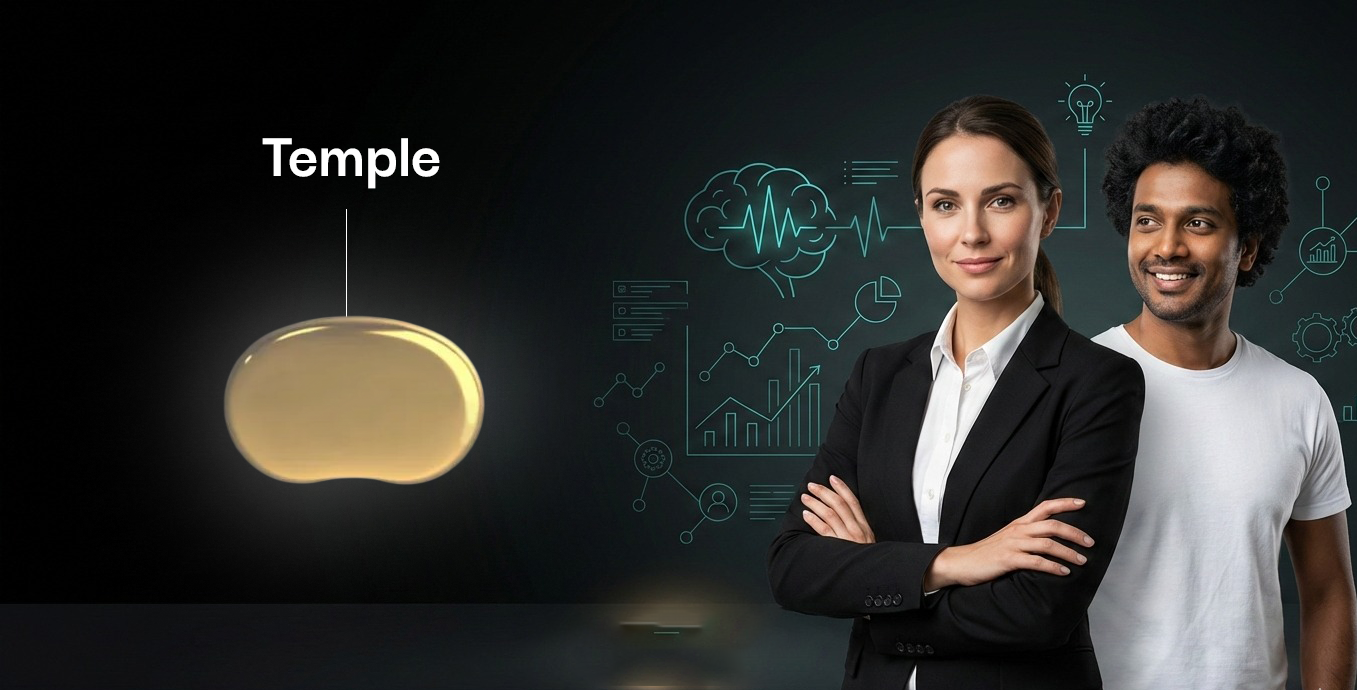
At the centre of the discussion is Temple, a research-driven wearable device designed to measure cerebral blood flow in real time. The device is worn on the forehead and aims to track how blood circulates to critical brain regions. Deepinder Goyal explained that Temple is part of research into the “Gravity Ageing Hypothesis” — a theory suggesting that gravity may accelerate ageing by affecting blood flow to areas of the brain responsible for hormonal balance and long-term health.
To be clear:
-
Temple is not a consumer product
-
There is no confirmed launch date
-
The project is still in the research and validation phase
But that hasn’t stopped the conversation from going viral.
Why the Zomato Founder’s Viral Podcast Resonated So Strongly
The reason this podcast clip gained attention isn’t just the technology—it’s the unexpected source. Zomato is one of India’s most recognisable consumer internet brands. Its founder talking about neuroscience, longevity, and deep-tech research challenges how people usually think about startup success. This podcast resonated because it touched on three powerful themes:
1. Founders Thinking Beyond Their Original Category
Deepinder Goyal isn’t positioning himself only as a food-tech founder anymore. He’s thinking like a long-term technology builder, willing to explore entirely new problem spaces.
2. Curiosity Over Comfort
The conversation showed a willingness to step into uncertainty — a mindset that often separates founders who sustain success from those who peak early.
3. A Shift From Convenience to Capability
Food delivery is about speed and scale. Health tech is about precision, research, and patience. That contrast made the podcast compelling.
Who Is Deepinder Goyal, the Mind Behind the Conversation?
To understand why this moment matters, it helps to understand the founder himself.
Deepinder Goyal:
-
Founder & CEO of Zomato
-
IIT Delhi graduate
-
Built Zomato from a restaurant discovery website into a publicly listed global tech company
-
Known for transparent leadership and long-term thinking
Under his leadership, Zomato expanded into:
-
Food delivery
-
Logistics infrastructure
-
Quick commerce (Blinkit)
-
Platform-led technology systems
In recent years, Zomato reorganised under its parent entity Eternal, signalling ambitions beyond food alone. The Temple project fits directly into this broader evolution.
The Strategic Meaning Behind the Viral Podcast
The Zomato founder’s viral podcast wasn’t a product announcement — it was a signal.
Escaping Saturation
Food delivery is a crowded, low-margin space. Exploring new sectors reduces long-term dependency on a single business model.
Building Deep-Tech Credibility
Health and neuroscience demand significantly higher technical depth. Even experimenting here strengthens credibility with:
-
Investors
-
Researchers
-
Global talent
Entering the Longevity Economy
Preventive health and longevity technology are among the fastest-growing global markets, driven by ageing populations and rising healthcare costs.
Creating Optionality
Even if Temple never becomes mainstream, it can still generate:
-
Intellectual property
-
Research data
-
Strategic partnerships
-
Future business options
That optionality alone makes the experiment valuable.
Why Investors Are Watching Closely
According to reports, Temple is seeking around $50 million in seed funding, and interest is already visible.
From an investor perspective:
-
The founder's track record reduces execution risk
-
Health tech offers asymmetric upside
-
Deep-tech moats are harder to replicate
-
Diversification beyond consumer internet is attractive
Of course, risks remain — regulation, scientific validation, long development cycles, and unclear monetisation. But that risk profile is exactly what defines early-stage deep-tech innovation.
Will Consumers Actually Use a Brain-Monitoring Device?
That remains an open question.
Health wearables already struggle with:
-
Comfort and usability
-
Trust in data accuracy
-
Turning data into actionable insights
A forehead-mounted brain monitor adds social and behavioural challenges. If Temple ever reaches users, its early audience will likely be:
-
Researchers
-
Clinicians
-
Athletes
-
Longevity and biohacking enthusiasts
Mass adoption, if it happens, will come much later.
Final Thoughts: Why This Viral Podcast Moment Matters
The Zomato founder’s viral podcast isn’t important because it guarantees success.
It matters because it shows:
-
A founder thinking beyond his comfort zone
-
A brand evolving beyond its original identity
-
A reminder that real innovation often starts with curiosity, not certainty
Temple may succeed, pivot, or quietly fade — and that’s fine. What matters is the mindset behind it. In today’s startup world, the brands that last aren’t the ones that play it safe. They’re the ones willing to ask uncomfortable questions, explore unexpected paths, and invest in the long game. And that’s why this conversation — not the device — is getting so much attention.